Last updated November 22, 2026
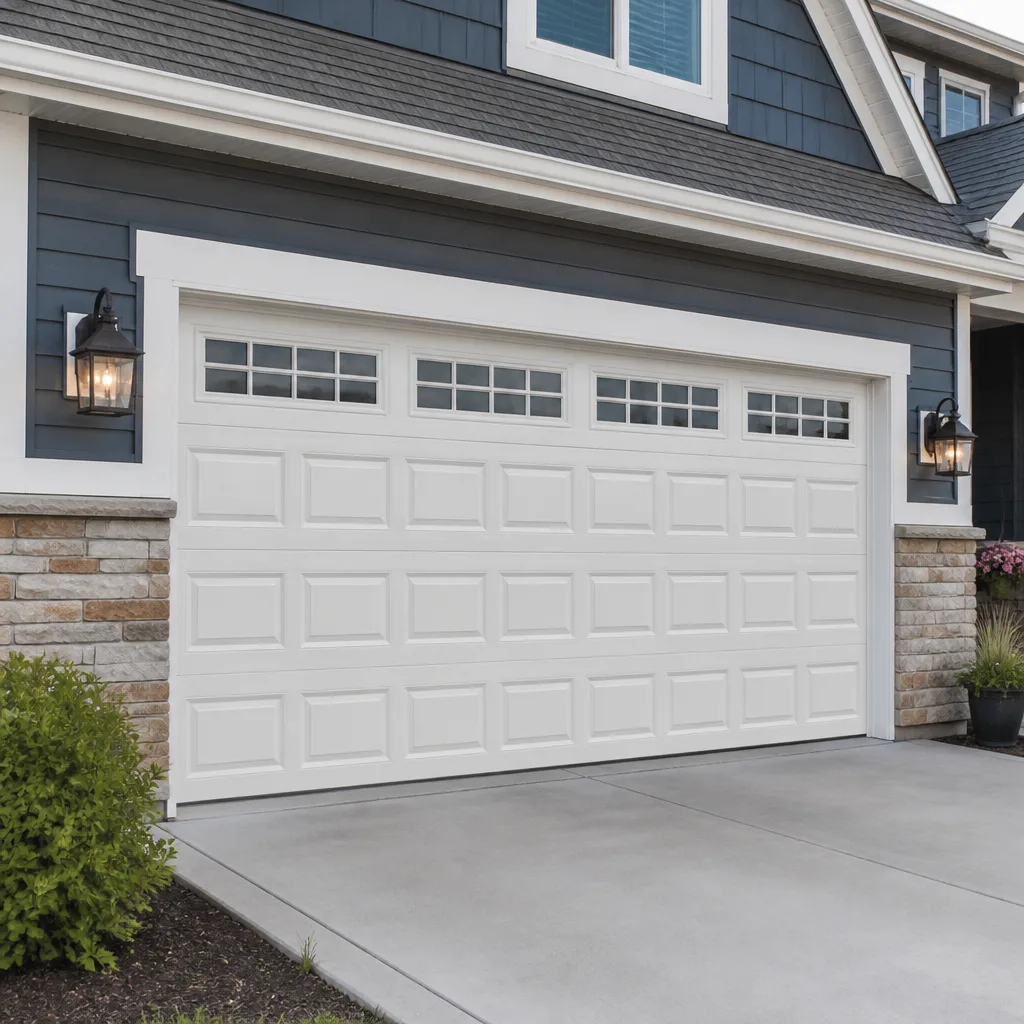 Raised-panel steel
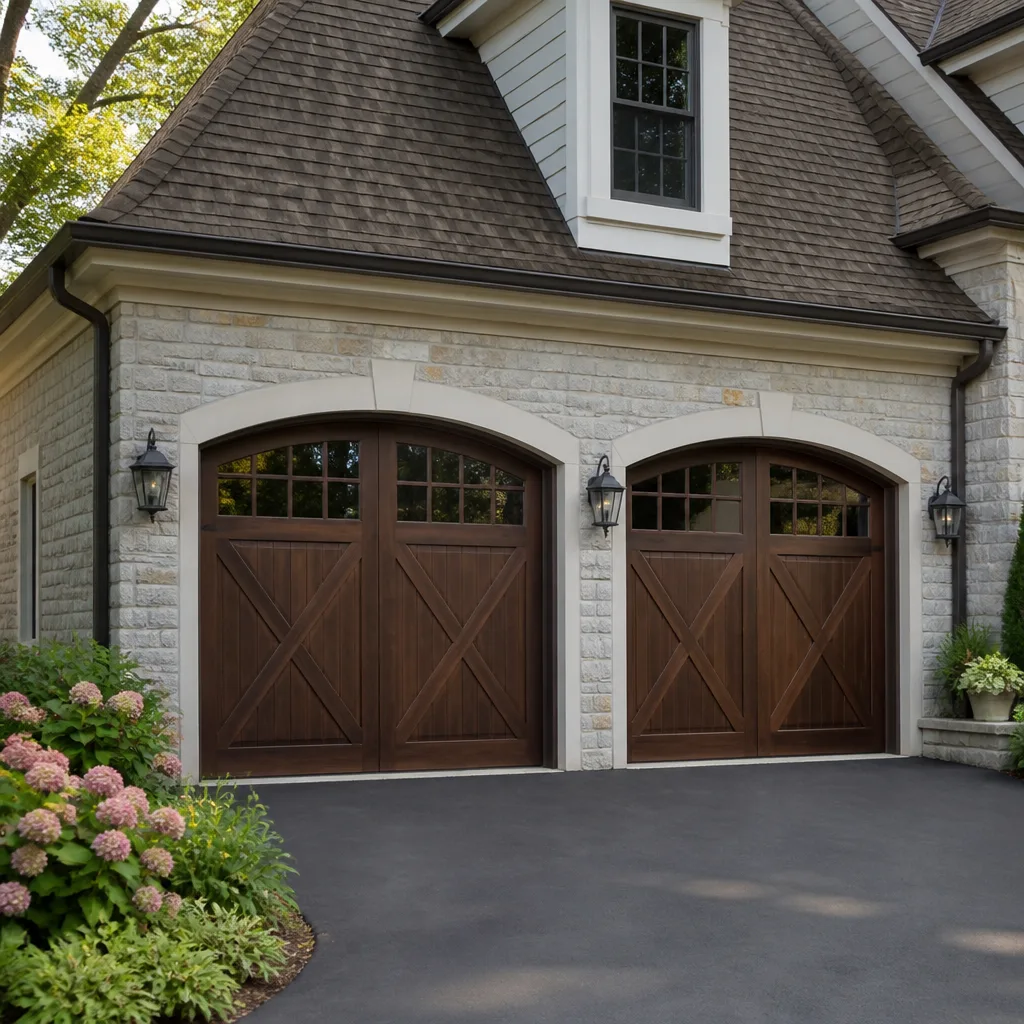 Carriage house
 Modern flush
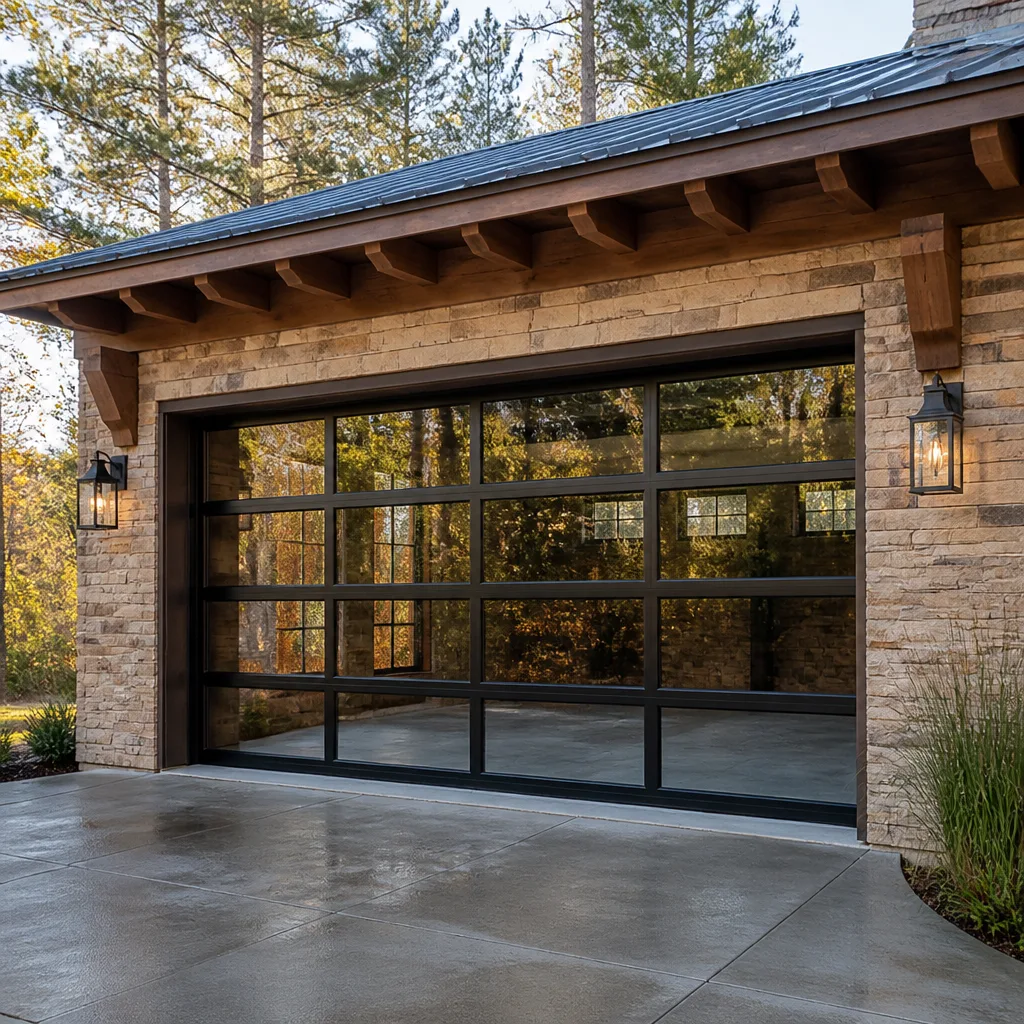 Full-view glass
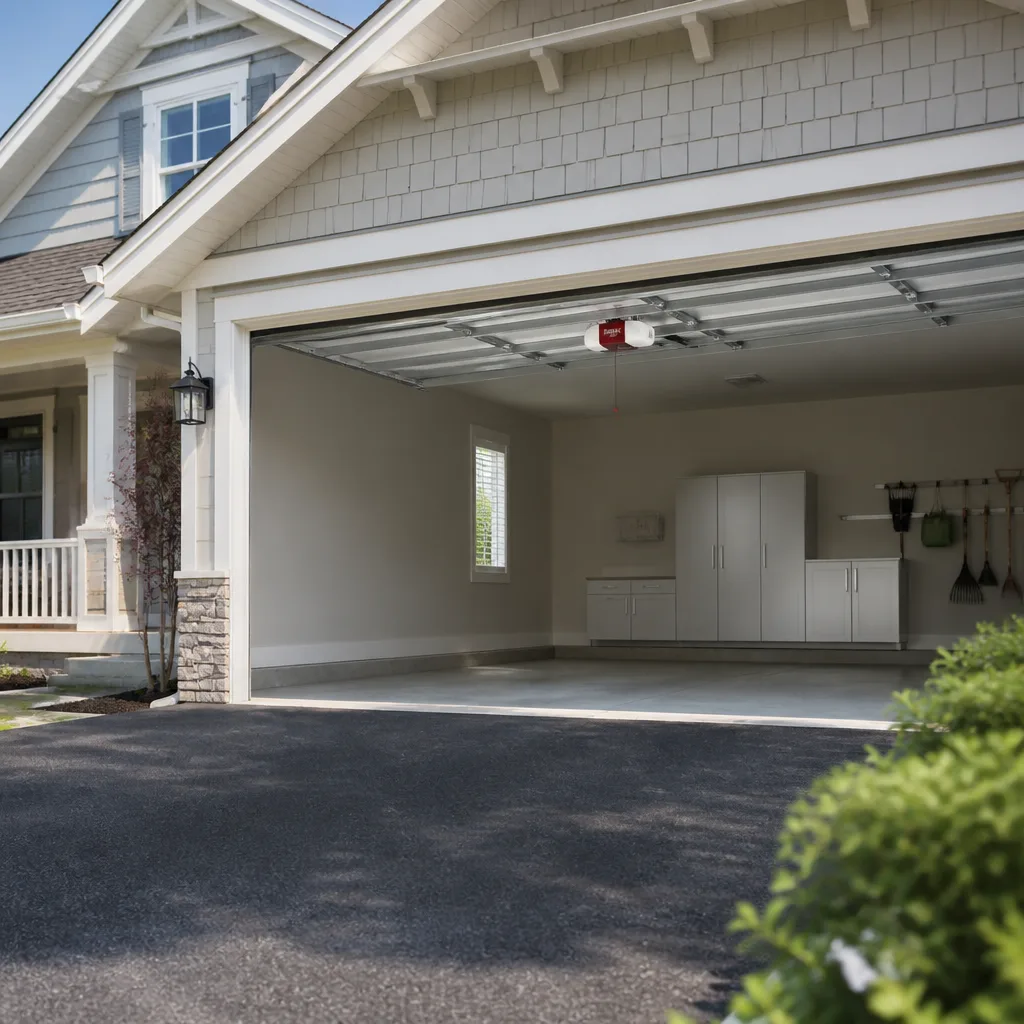 LiftMaster openers
 Chamberlain openers
Full 25-point door and opener safety check with every visit - springs, cables, rollers, tracks, and your LiftMaster or Chamberlain opener included
You get a price before we start. It does not change when the pro arrives.
Get your free estimateDIY vs Professional Garage Door: The Bethlehem Homeowner’s Decision Guide
Replacing a bottom weatherseal is a legitimate DIY task that takes about 20 minutes with a screwdriver and a new strip. Replacing a torsion spring is a task that sends several hundred people to the emergency room every year in the United States. The difference between those two jobs is not your comfort level, your confidence, or how many videos you’ve watched. It’s stored energy. One job involves rubber and aluminum. The other involves a steel coil holding enough torque to throw a grown adult across a garage. This guide draws that line task by task, so Bethlehem homeowners know exactly what’s safe to take on and what isn’t.
Quick Answer
Most garage door maintenance, like lubrication, weatherseal replacement, sensor alignment, and opener programming, is reasonable DIY work for a careful homeowner. Spring replacement, cable replacement, and track realignment are not DIY jobs. Torsion springs store hundreds of foot-pounds of torque, and a slipped winding bar can cause severe injury in a fraction of a second. In Bethlehem, call a specialist for anything involving springs, cables, or bent track, and handle the rest yourself if you’re comfortable on a ladder.
Styles & brands we work with
- Raised-panel steel
- Carriage house
- Modern flush
- Full-view glass
- LiftMaster openers
- Chamberlain openers
Table of Contents
- Where the DIY Line Actually Falls
- Why Torsion Springs Are Categorically Different
- The DIY Tasks That Are Genuinely Reasonable
- The Tools You Actually Need (And What You Can’t Buy)
- Cost Comparison: DIY Savings vs. DIY Mistakes
- Pennsylvania Liability, Warranty, and Insurance Considerations
- When to Call a Professional
- Frequently Asked Questions
Where the DIY Line Actually Falls
The garage door is the largest moving object in most homes, and it operates under tension every single time it opens or closes. That’s why the DIY vs. professional question needs a sharper answer than “it depends on your skill.” It doesn’t depend on skill. It depends on whether the task involves stored mechanical energy that can release uncontrollably.
Split every garage door job into two categories and the decision gets simple:
- Low-energy tasks: weatherseals, hinges, rollers, lubricant, photo-eye sensors, remote programming, and visual inspections. These involve parts you can handle with your hands and tools you probably already own.
- High-energy tasks: torsion springs, extension springs, lift cables, and track realignment after impact. These involve components under hundreds of pounds of tension. When they fail, they fail violently.
In Bethlehem, the housing stock ranges from older homes in neighborhoods like Fountain Hill and South Side to newer builds out toward Hanover Township, and the door systems reflect that range. Older doors often use extension springs mounted above the track. Newer ones almost always use torsion springs on a shaft above the door. Both types are high-energy. Neither is a beginner repair.
A good rule of thumb: if the repair requires you to release tension from a spring or cable, stop and call. Everything else is negotiable.
Why Torsion Springs Are Categorically Different
A torsion spring is a tightly wound steel coil designed to counterbalance the weight of the door. For a typical single-car door, that spring might hold around 150 to 200 foot-pounds of torque when wound. A double-car door can run considerably higher. That energy is what makes the door feel light enough to lift with one hand. It’s also what makes the spring dangerous.
When a torsion spring breaks, the stored energy releases instantly. The sound is often described as a gunshot. The spring itself can whip. The winding bars, if they’re still in the spring when it fails, can be thrown with enough force to break bones. Professional technicians use winding bars made from hardened steel sized precisely to the spring’s winding cone, and they wind and unwind springs from a stable stance with the door clamped and secured.
Extension springs carry the same risk in a different geometry. They stretch along the track and store energy along their length. When they break, they whip toward whatever is nearby. That’s why modern installations include safety cables threaded through extension springs, and why an old door without them deserves attention even if nothing has failed yet.
The physics is what matters here. A weatherseal failure means a draft. A cable failure means the door drops. A spring failure means a heavy steel coil unloads kinetic energy in your direction. There’s no tutorial that changes the stored torque, and there’s no DIY trick that makes a wound spring safe to handle without the right tooling and training. This is why spring repair is a dedicated service for us and for any specialist who takes the work seriously.
The DIY Tasks That Are Genuinely Reasonable
Plenty of garage door maintenance is well within reach for a homeowner with basic tools and a bit of patience. Here’s what we’d call reasonable, with the caveat that any task involving a ladder deserves a second person spotting.
- Lubrication. A few drops of garage door lubricant on the hinges, rollers, and pivot points every few months keeps the door quiet and reduces wear. Use a lubricant made for the job; WD-40 is a solvent, not a lubricant, and it will dry out the metal over time.
- Weatherseal replacement. The rubber strip along the bottom of the door slides into an aluminum retainer or fastens with small screws. Measure the width, buy a matching strip, pull the old one out, and slide the new one in. A 20-minute job on most doors.
- Photo-eye sensor alignment. If the door reverses on the way down or won’t close, the two small lenses near the floor are usually the culprit. Check that they’re facing each other, wipe them clean, and confirm the indicator light is solid, not blinking. The brackets behind the lenses can shift if something bumps them.
- Opener programming. Reprogramming a remote, keypad, or HomeLink button is a matter of following the manual for your opener brand. If your opener is a LiftMaster or Chamberlain, the learn button and pairing sequence are in the manual or on the unit’s label. If you’ve lost the manual, we can walk you through the sequence for most Genie and Craftsman units too.
- Visual inspections. Once a month, look at the springs, cables, rollers, and hinges. If you see a gap in a torsion spring, a frayed cable, or a roller that’s popped out of its bracket, stop operating the door and call.
Notice what’s missing from that list: springs, cables, and track. Those belong in the next section, and they belong there for a reason.
The Tools You Actually Need (And What You Can’t Buy)
For the safe DIY tasks above, your toolbox is already close. Here’s what a Bethlehem homeowner actually needs on hand:
- A sturdy stepladder, rated for your weight, with a spotter when you’re working above head height
- A cordless drill with a nut-driver bit for hinge screws and sensor brackets
- A socket set for roller brackets (usually 3/8″ or 7/16″)
- A spray can of garage door lubricant
- Replacement rollers, hinges, and weatherseal strips sized for your door
- A tape measure and a level for sensor work
- Work gloves and safety glasses
Now the parts you can’t buy at a typical home center. Torsion springs are wound and unwound with two solid steel winding bars, sized to fit the winding cone on the specific spring. Those bars are not stocked at Home Depot, and there’s a reason. A winding bar is a precision tool that must fit the cone exactly; a loose fit or a wrong diameter turns a controlled wind into a slip. Selling them to homeowners without the training that goes with them would be irresponsible, and most suppliers know it. If you find a set online, ask yourself why the professional trade keeps them behind the counter.
You’ll also need to know the door’s exact weight and the spring’s wire gauge, inside diameter, and length to order a correct replacement. Getting that wrong changes the balance of the door and puts extra stress on the opener and cables. That’s not a measurement most homeowners can take safely with the spring still wound.
Cost Comparison: DIY Savings vs. DIY Mistakes
Here’s how a typical DIY calculation usually goes vs. what we actually see. Prices below are typical for the Bethlehem area and are estimates only. The written quote from any contractor sets the final price.
- Weatherseal replacement: $20 to $40 in parts, 20 to 30 minutes of your time. Professional install typically $75 to $150 for the call. Reasonable DIY.
- Photo-eye sensor replacement: $15 to $40 in parts. Professional repair typically $100 to $200 depending on wiring. Reasonable DIY if the wiring is intact.
- Opener remote or keypad programming: free if you have the manual. Professional visit typically $75 to $150. DIY all the way.
- Single torsion spring replacement: one spring typically $180 to $340 installed. Two springs replaced together (a matched pair, which is what most doors need) run roughly double. A winding bar set runs $40 to $80 online, and the spring itself is $40 to $120 depending on size. The math says DIY saves money. The risk math says it doesn’t.
- Track realignment after a DIY spring attempt goes wrong: a bent track, a dropped door, or a snapped cable turns a $180 to $340 spring repair into a $400 to $900 door repair or a panel replacement.
- Opener replacement after a botched adjustment: $350 to $700 installed for a new unit, depending on brand and features.
That last category is what catches people. The DIY spring job that “sort of works” leaves the door unbalanced. An unbalanced door puts extra load on the opener’s gear and rail. Within a few months the opener fails, and now you’re paying for a spring replacement and an opener replacement. The original professional rate would have been the cheaper option. In our experience, that sequence plays out more often than homeowners expect.
The one DIY item worth doing at every price point is lubrication. Two minutes a quarter extends the life of every roller, hinge, and bearing on the door. It’s the cheapest maintenance you can do.
Pennsylvania Liability, Warranty, and Insurance Considerations
Pennsylvania doesn’t require a state license for garage door technicians, which means anyone can technically advertise door work. In practice, that makes the warranty question more important, not less. If a homeowner performs a repair on a component under manufacturer warranty and something fails as a result, the manufacturer is likely to treat the warranty claim as void. This is most common with opener warranties, which often exclude damage caused by improper installation or by an unbalanced door.
On the liability side, most Pennsylvania homeowners’ policies cover damage to the home, but not injury to the homeowner doing the work. A sprained back from lifting a door is not a covered claim. A dropped door that lands on a car might be, depending on the policy, but only after the deductible. The policy will also typically decline to cover a repair that a contractor has to redo, since that’s considered a workmanship issue rather than a covered loss.
For track repair, spring work, and anything involving the counterbalance system, our recommendation is to keep a licensed professional on the job. The specialist who handles the work is licensed and insured as the state requires, which matters more on a job involving stored energy than on, say, replacing a light fixture. If a manufacturer’s warranty is still active on your door or opener, ask the technician to confirm in writing that the repair won’t void it.
One more note specific to older Bethlehem homes: if the garage was built before the early 1990s, the opener may predate the federal mandate for photo-eye safety sensors. If your door closes without a working reverse, that’s a safety issue that no amount of DIY tuning fixes. It’s worth having a specialist look at the setup and confirm the sensors are working.
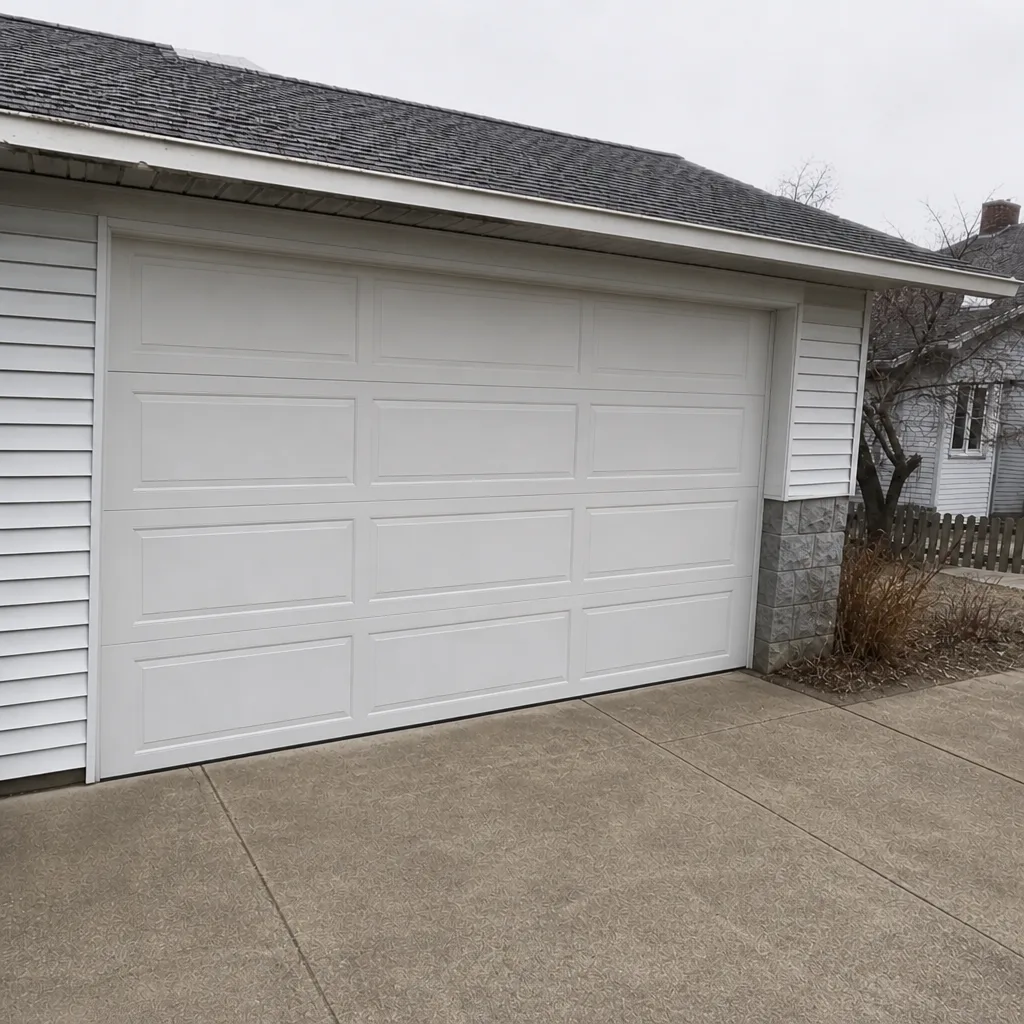
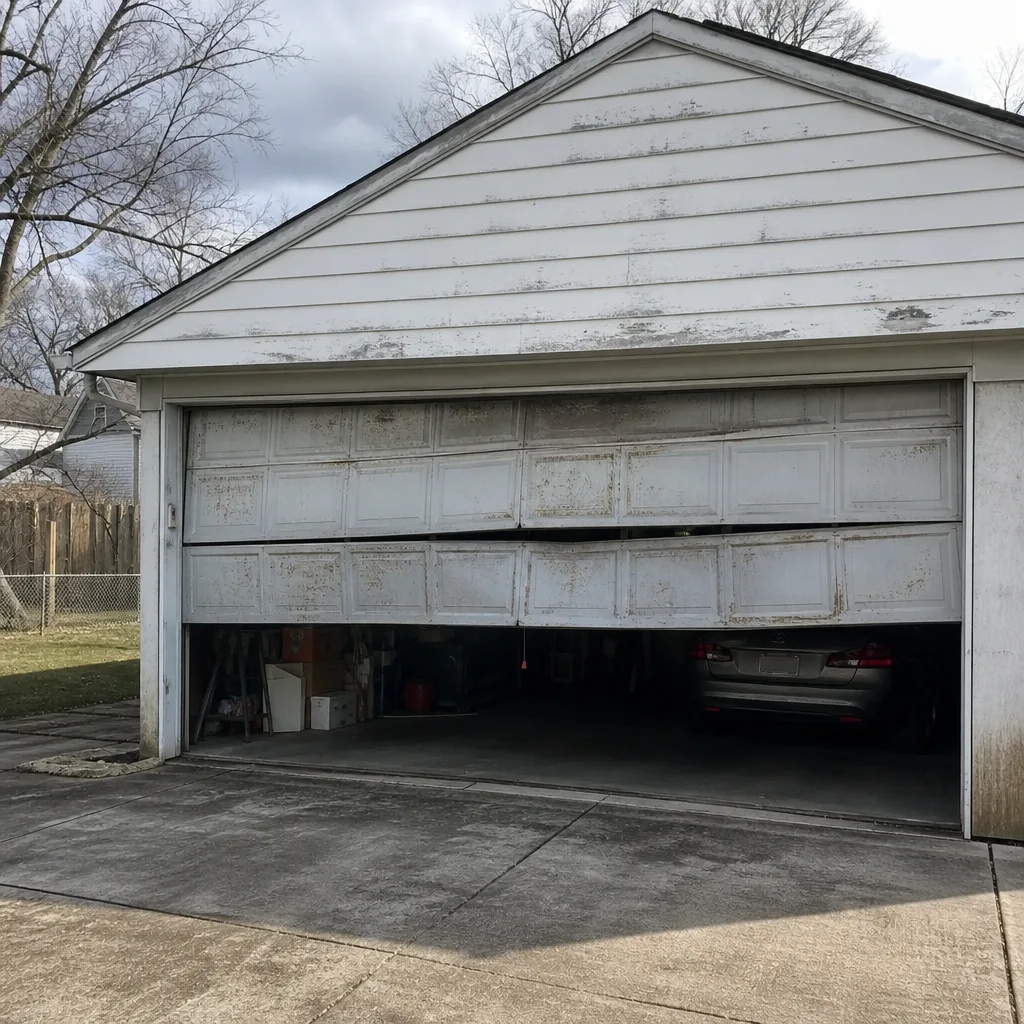
See the difference
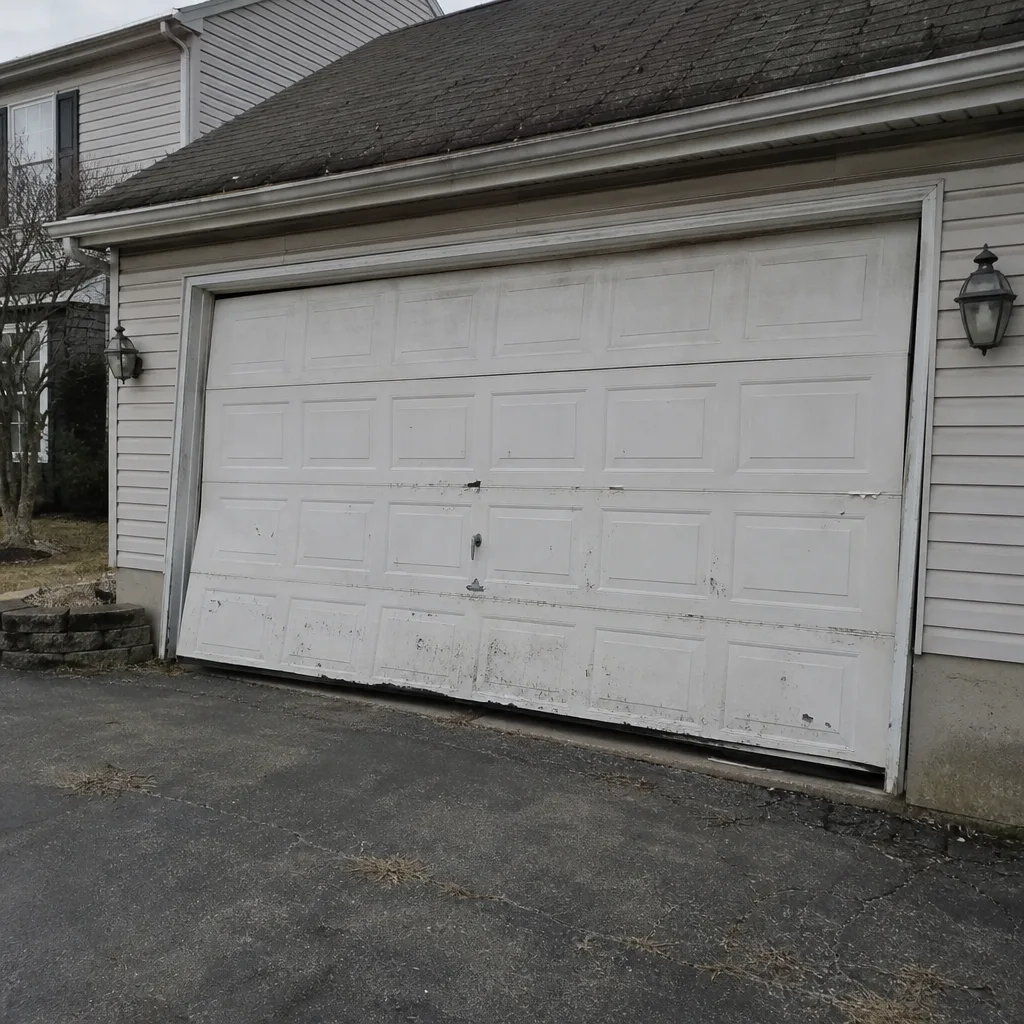 Before
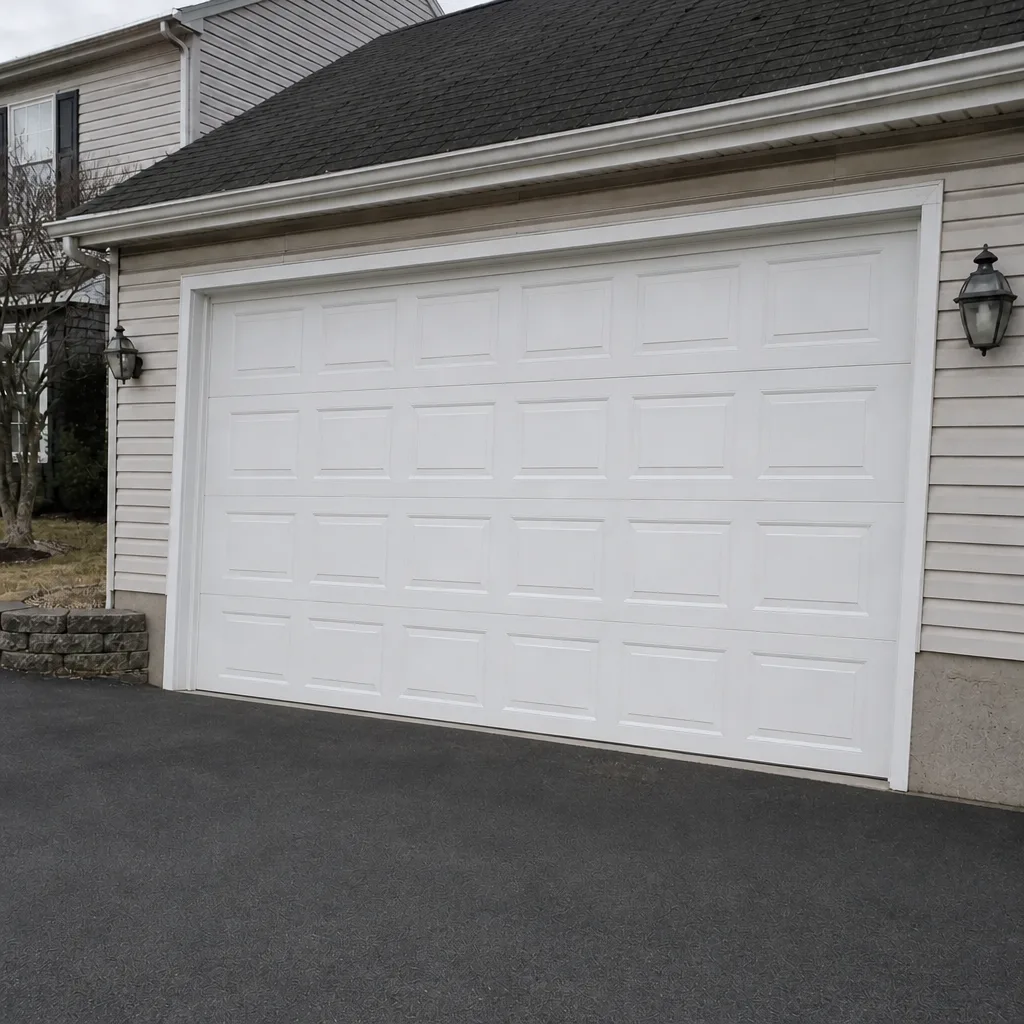 After
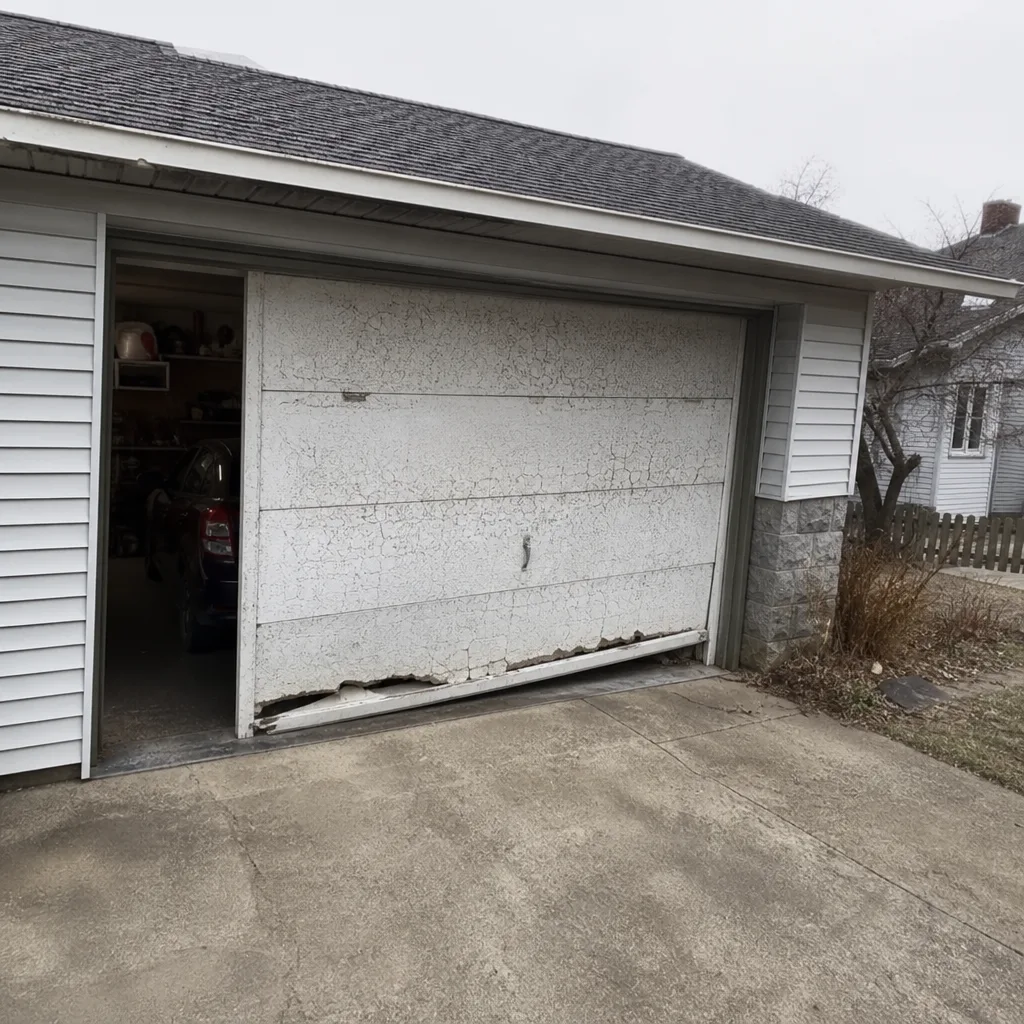 Before
 After
 Before
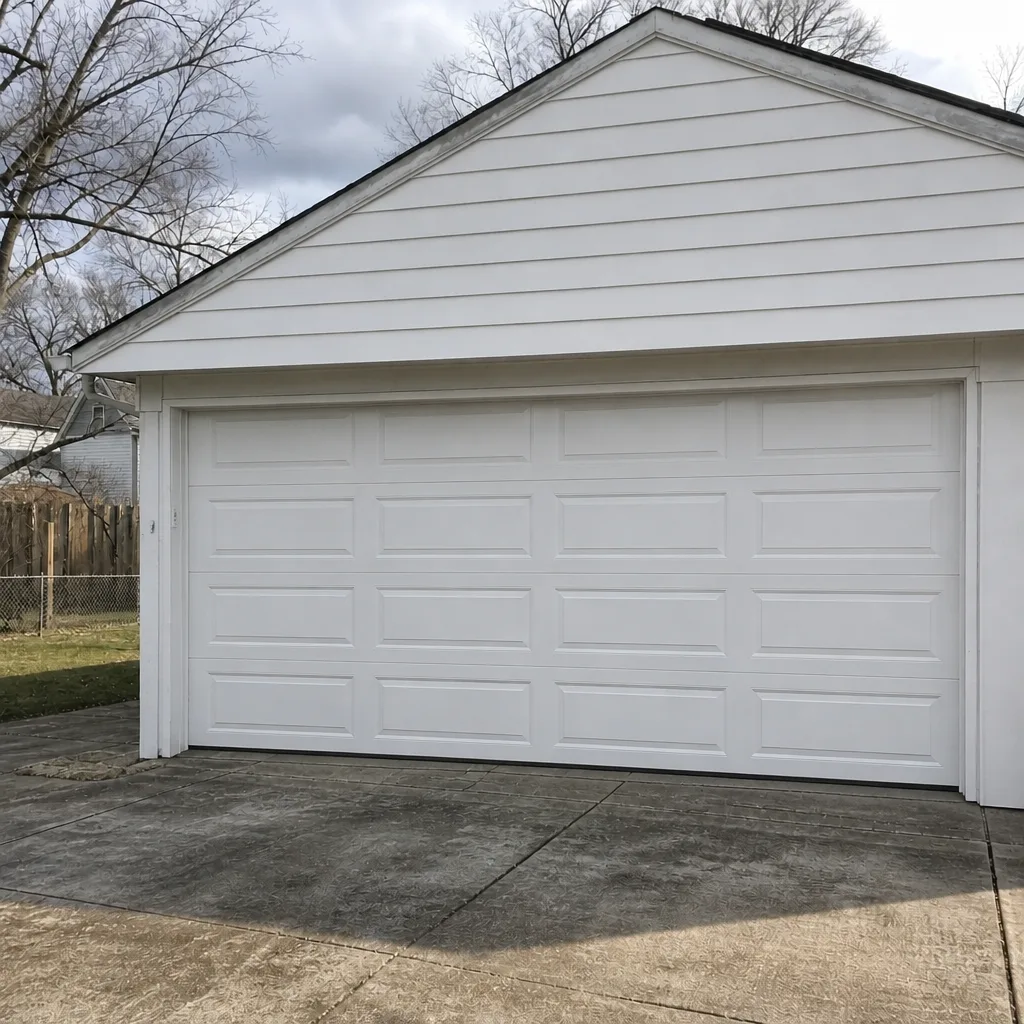 After
Common Mistakes to Avoid
- Winding a spring with a screwdriver. A screwdriver is not a winding bar. It can slip out of the cone and the spring can unload. Always use the correct tool or don’t do the job.
- Adjusting the spring tension to “fix” a slow door. If the door feels heavy or the opener is straining, the spring tension is out of balance. Adding more wind makes the problem worse, not better.
- Using the opener to lift a broken door. The opener is not designed to lift the weight of an unspring door. Running it will burn out the gear and can snap a cable.
- Ignoring a frayed cable. Cables carry the full weight of the door along their length. A frayed cable is a cable about to break, and DIY cable work is a fatality-risk job. Never do it yourself.
- Painting over the photo-eye sensor. Fresh paint on the lens of the safety sensor will make the door reverse randomly or refuse to close. Tape the lenses before you paint the door frame.
- Ordering a replacement spring online without measuring. A spring that’s the wrong wire gauge or length will overstress the door, the cables, and the opener. The door’s weight, not just its width, decides the spring.
- Skipping the safety cable on extension springs. If the springs above the track don’t have a steel safety cable threaded through them, have that added. When the spring breaks, the cable is what keeps it from whipping into the bay.
When to Call a Professional
Call a specialist when the door stops opening, when you hear a loud snap from the springs, when the door hangs at an angle, when a cable looks frayed or slack, or when a broken spring is obvious. Call when the door reverses on its own and sensor adjustment doesn’t fix it. Call when a vehicle has bumped the track and the door won’t seat in the frame. Call when the opener runs but the door doesn’t move. And call when you can’t identify what’s wrong but something sounds different than it used to.
We work on the brands that show up most often in Bethlehem garages: LiftMaster, Chamberlain, Genie, Clopay, Amarr, Wayne Dalton, Craftsman, and Raynor. That means when we arrive, we already know the hardware in front of us. Bethlehem Garage Door Repair Co offers free estimates in Bethlehem. Call (866) 937-7470 and we’ll get your door moving again. Emergency garage door service is a core part of what we do, and we can also handle garage door repair for the day-to-day issues that don’t wait. If the opener itself has failed, we handle garage door opener repair across the major brands, and when the door is beyond saving, garage door installation is part of the same job. For a full picture of what Bethlehem Garage Door Repair Co covers, our specialists can walk you through it.
Frequently Asked Questions
You can physically buy a spring and a set of winding bars, but you should not do the job yourself. Torsion springs store hundreds of foot-pounds of torque, and a slipped winding bar can cause severe injury in less than a second. The correct tooling, the right spring size, and the technique to wind and unwind safely are all things a trained technician brings to the job. Call for a free estimate on a spring replacement instead.
A single torsion spring replacement typically costs $180 to $340 installed in the Bethlehem area. A matched pair, which most doors actually need since both springs wear at the same rate, runs roughly double that. The written estimate from the technician sets the final price, and the price is quoted and agreed before any work begins. Call (866) 937-7470 for an exact quote, and estimates are free.
It’s rarely worth it. A new opener requires matching the unit to the door’s weight, connecting the safety sensors, adjusting the travel limits, and securing the rail to the header. Getting any of those wrong stresses the door, voids the opener’s warranty, and can leave the door operating unsafely. A pro installation typically runs $350 to $700 depending on the unit. If your opener has failed, call for a free estimate on replacement or repair.
It can. Most manufacturer warranties on openers and door components exclude damage caused by improper installation or by an unbalanced door, and a DIY repair is often treated as the cause when a claim is filed. Keep the manual and any professional service records. If you’re not sure whether your warranty is still active, ask the technician to confirm before the work starts.
Lubrication, weatherseal replacement, photo-eye sensor cleaning and alignment, and remote or keypad programming are all reasonable DIY tasks. Visual inspections are worth doing monthly. Anything involving springs, cables, or track realignment should go to a specialist. If you’re not sure which category a job falls into, the safe answer is to call and describe it, and we’ll tell you if it’s a DIY job.
For repair and emergency calls, same-day service is often available and we offer fast dispatch. For installation and replacement, the job is measured, ordered, and scheduled, so the timeline is set by the door’s lead time rather than a same-day window. Either way, the estimate is free and the price is agreed before any work starts. Call (866) 937-7470 to get on the schedule.
The Bottom Line
The DIY vs. professional decision on a garage door comes down to stored energy, not skill. Handle the low-energy tasks yourself: lubrication, weatherseal, sensors, and programming. These are real DIY jobs and there’s no reason to pay for them. Leave the high-energy tasks, springs, cables, and track realignment, to a specialist who has the tooling and the training to release that energy safely. In Bethlehem, the cost of a professional spring replacement is small compared to the cost of a botched repair or an injury. If you’re on the fence about a specific job, describe it to us and we’ll tell you honestly which side of the line it falls on. Call (866) 937-7470 for a free estimate.
Written by the team at Bethlehem Garage Door Repair Co.