Last updated November 22, 2026
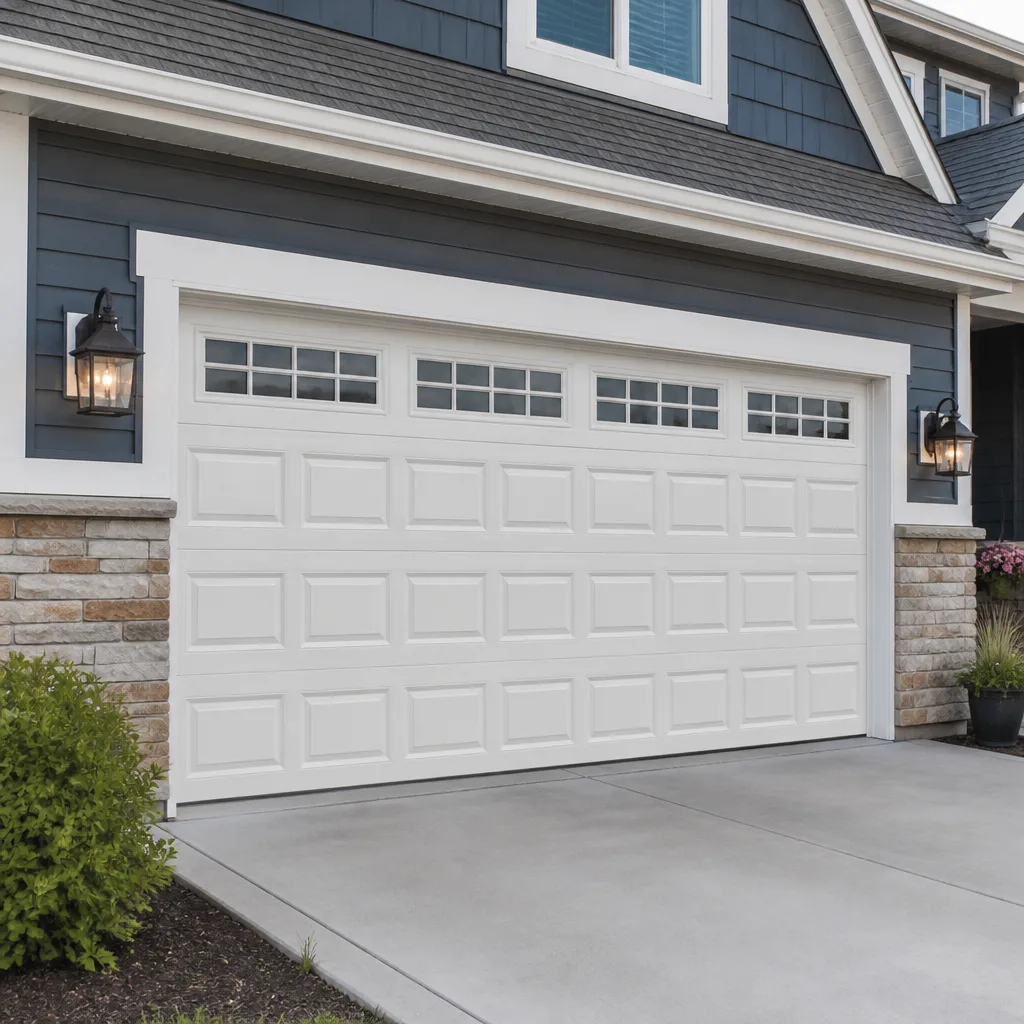 Raised-panel steel
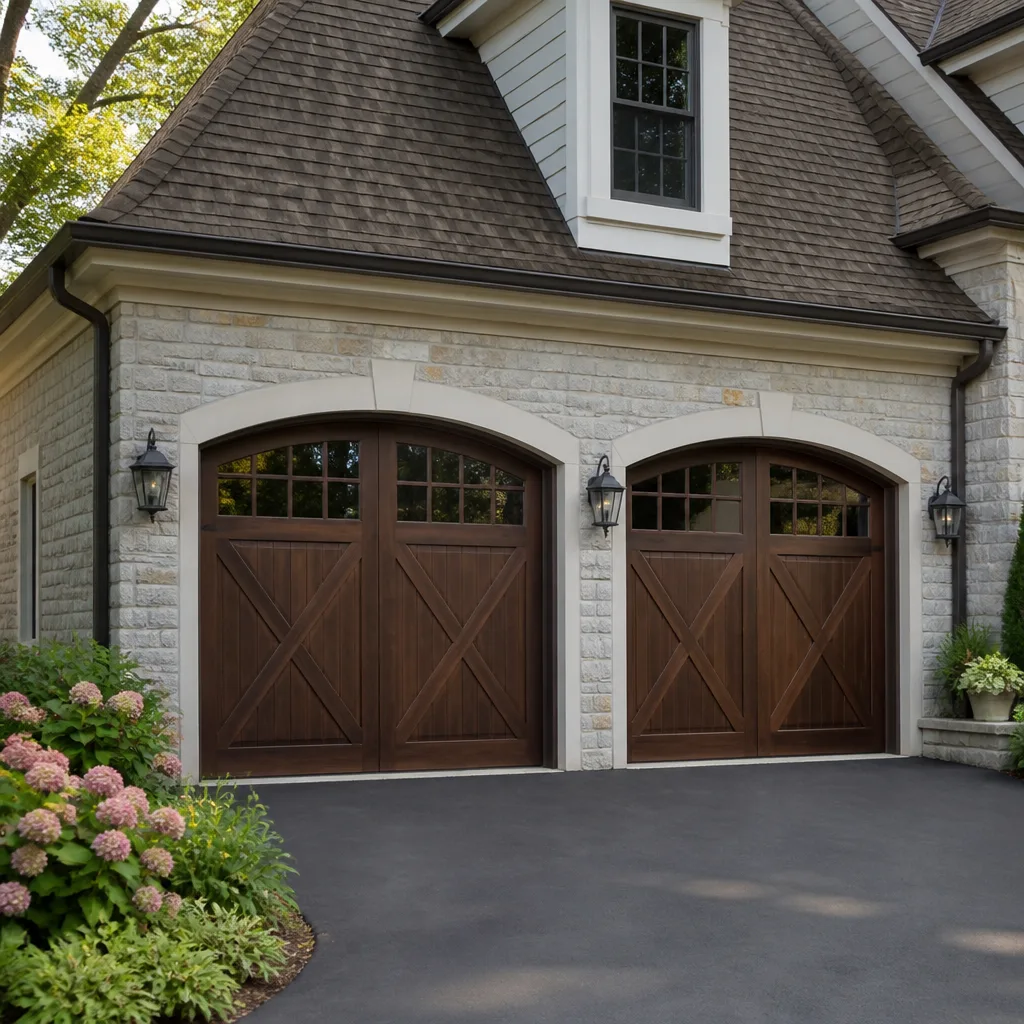 Carriage house
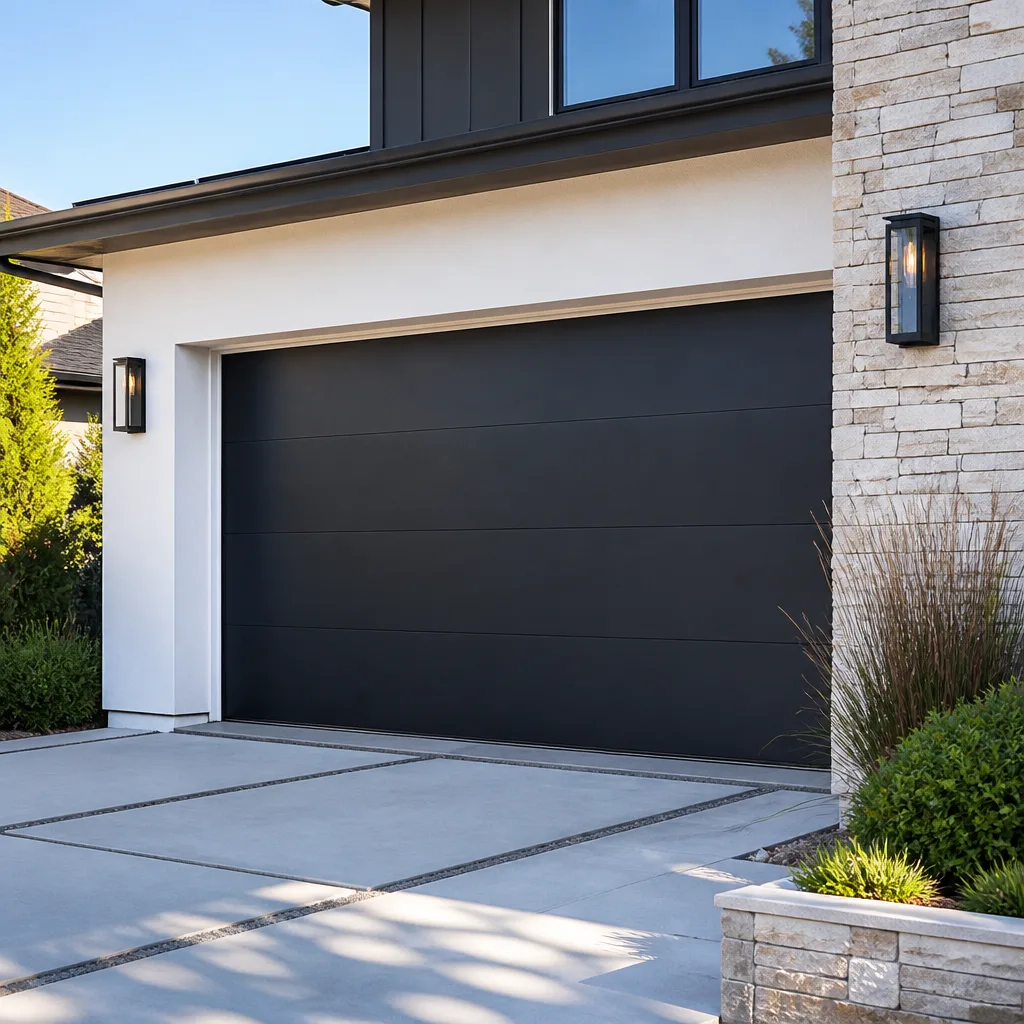 Modern flush
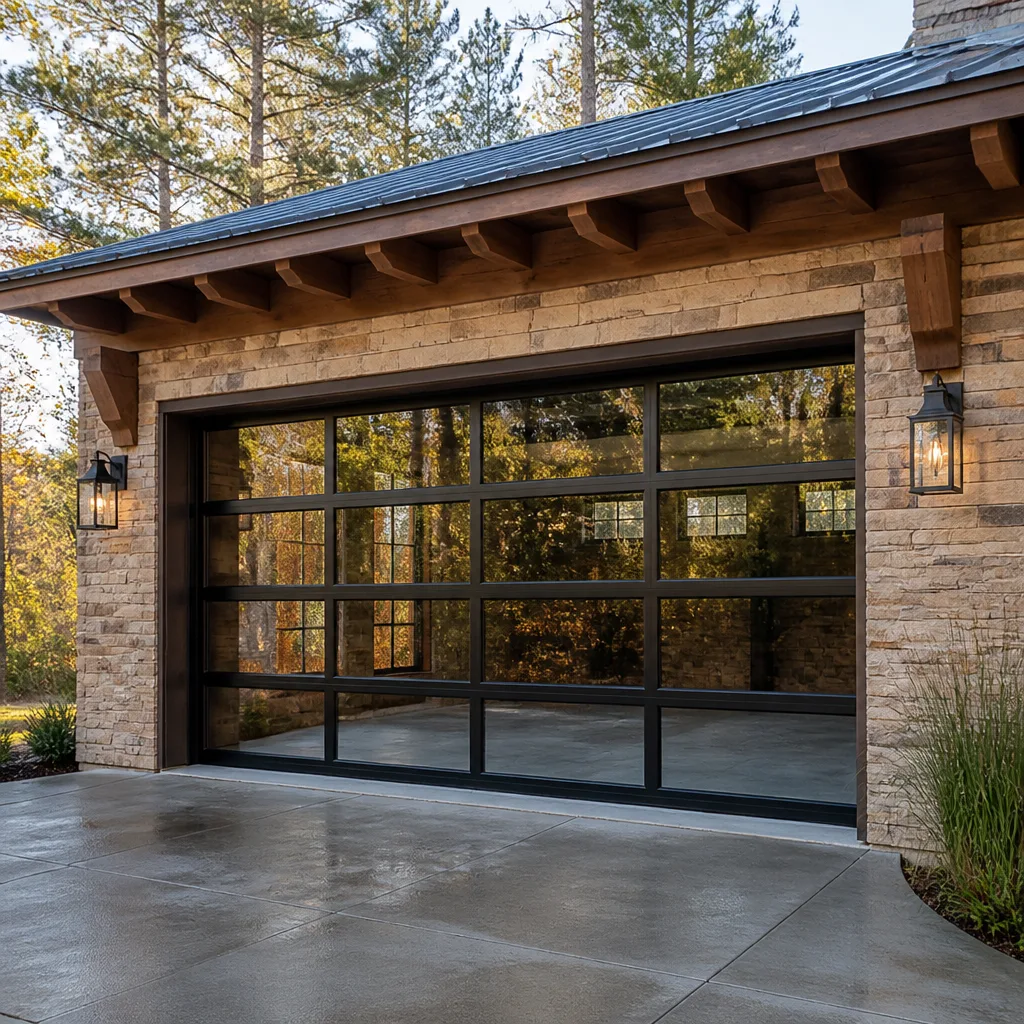 Full-view glass
 LiftMaster openers
 Chamberlain openers
Full 25-point door and opener safety check with every visit - springs, cables, rollers, tracks, and your LiftMaster or Chamberlain opener included
You get a price before we start. It does not change when the pro arrives.
Get your free estimateGarage Door Warning Signs: A Bethlehem Homeowner’s Reference Guide
A grinding noise and a squeaking noise both get described as “a weird sound,” but they point to very different problems. One usually means dry rollers that need lubrication. The other can mean spring coils are binding and may be days from snapping. That gap between what you hear and what’s actually failing is where most garage door calls go sideways: the wrong part gets ordered, the visit gets repeated, and the door keeps getting used when it shouldn’t. This guide decodes the specific sounds, movements, and visual cues that tell you which component is failing, how urgent it is, and how to describe it accurately to a technician so the right parts show up the first time. Everything here is written from what we see working on doors across Bethlehem.
Quick Answer
Garage door warning signs fall into three groups: sounds (banging, grinding, squealing, rattling, clicking), visual cues (frayed cables, worn rollers, bent tracks, gap-toothed springs), and behaviors (hesitating, reversing, running unevenly, stopping short). Any sign of a broken spring or a frayed cable means stop using the door and call a professional. Grinding, squealing, or minor rattling usually allows normal use while you schedule service. In Bethlehem, the temperature swings and damp winters we get here make lubrication and balance checks worth doing a little more often than homeowners expect.
Styles & brands we work with
- Raised-panel steel
- Carriage house
- Modern flush
- Full-view glass
- LiftMaster openers
- Chamberlain openers
Table of Contents
- What each garage door sound is telling you
- Visual warning signs, by component
- Behavioral warning signs: hesitation, reversal, uneven movement
- Signs that mean stop using the door immediately
- How to describe the problem so the right parts arrive
- Why Bethlehem seasons stress garage doors differently
- Common mistakes to avoid
- Frequently asked questions
What Each Garage Door Sound Is Telling You
Sound is the earliest warning a garage door gives you, and each sound maps to a specific part. When you can name the sound accurately, you skip a diagnostic visit. Here’s how we break it down over the phone.
- Banging or booming. A loud bang is often the torsion spring snapping, a cable letting go, or a door dropping off one side. Treat it as urgent: stop using the door, and don’t pull the manual release if a spring has broken. Call for emergency service.
- Grinding. Usually rollers that have dried out or worn flat spots, or a torsion shaft with a dry bearing. Grinding allows normal use short-term, but it wears the metal down and gets worse. Schedule service before it starts damaging the tracks.
- Squealing or screeching. Dry hinges, a dry torsion spring coil, or a worn idler pulley in the opener. Squealing is the least urgent of the loud sounds, but spring coils that squeal as they wind are worth looking at soon, especially in a cold Bethlehem garage where grease stiffens up.
- Rattling. Loose hinge bolts, a loose track bracket, or a top section that has worked loose from the opener arm. Usually a tightening job, cheap to fix and easy to ignore until the rattle turns into a vibration that shakes the whole door.
- Clicking. The opener’s drive gear, a limit switch, or a safety sensor relay. Clicking from the opener motor itself can mean the gear teeth are wearing and the opener is on borrowed time.
- Popping or snapping. Often the torsion spring has just failed, or a worn hinge is binding. A single sharp pop followed by a door that won’t hold its weight is a spring failure.
If you can tell us the sound and where it’s coming from, whether it’s above the door, from the opener head, or from the tracks, we can often tell you what’s likely wrong before we arrive. That saves you the second visit and a parts wait.
Visual Warning Signs, by Component
You don’t need to touch anything to spot most failures. A quick visual walk-around of the door and hardware reveals the same cues we look for, and each one points to a different part.
What frayed cables look like
A healthy cable is a tight, uniform bundle of strands with a clean stainless or galvanized finish. A failing cable has individual strands poking out, a fuzzy or “hairy” look, kinks, or flat spots where it’s been binding on a drum. Frayed cables are a stop-use sign. A cable that snaps under tension can whip, so don’t try to wind or slacken it yourself.
What a worn roller looks like vs. a bent track
A worn roller has a flat spot or a groove worn into it, or the bearing is loose enough that the roller wobbles when you wiggle the door by hand. Worn rollers are a schedule-service sign; they cause grinding and make the opener work harder. A bent track has a visible kink, a track that’s pulled out of line with the door edge, or a gap between the wheel and the track edge. Bent tracks can cause the door to bind or jump the track, so stop use if the door is running rough and the track is clearly out of line.
What a failing spring looks like
A torsion spring that’s close to failing often shows a visible gap in the coil (a broken coil section) or looks stretched out of shape. Extension springs can show a stretched look or corrosion. If you can see a gap in the coil or the spring looks worn well past its working life, treat it as a spring to replace, and keep everyone off the door in the meantime.
Panel and hardware cues
Look for dented or cracked panels, bottom seals that are split or pulling away, and hinge screws that have backed out. On a Clopay or Amarr steel door, stress cracks along a panel bend can eventually open into a hole, so catch them early. On a Wayne Dalton door, worn bottom brackets and loose hinges show up as a sagging bottom section.
Behavioral Warning Signs: Hesitation, Reversal, Uneven Movement
The door’s movement tells you as much as its sound. Each behavior points to a different underlying cause, so read the movement before you assume it’s the opener.
- Hesitates before moving or stalls partway up. Usually the opener is straining against a door that’s out of balance, or the drive gear is worn. An unbalanced door can make a healthy opener look like a failing one.
- Reverses unexpectedly. Often a safety sensor that’s out of line, dirty, or blocked by a cobweb or debris, or a binding track that makes the opener think it hit an obstacle. Also check the opener’s travel limits.
- Moves unevenly, one side higher than the other. A sign of a cable that’s slipping, a broken or stretched spring, or a bent track. Stop use and have it looked at; a door running crooked can jump the track entirely.
- Drops the last few inches fast. A spring that’s lost tension or a door that’s badly out of balance. Don’t stand under it.
- Won’t close all the way. A safety sensor issue, a bottom seal obstruction, or a misadjusted travel limit. Simple fixes, but not one to ignore.
If your door hesitates or runs crooked, don’t keep cycling it to test it. Each cycle on a failing spring or cable puts more stress on the part. Call for garage door repair, describe the behavior, and get it looked at before it gets worse.
Signs That Mean Stop Using the Door Immediately
Some signs allow normal use while you schedule service. Others mean you should stop operating the door at once and call a professional. Here’s the short version.
- Broken torsion or extension spring. The door is now being held up by the opener, which is not designed to lift a full door. Using it can wreck the opener and cause the door to fall.
- Frayed or visibly damaged cable. A cable under tension can snap and whip. Don’t try to adjust, loosen, or rewind it.
- Door off one track or visibly crooked. A door that’s slipped the track can drop without warning. Keep everyone clear.
- Door that won’t hold its weight. If the door drops or sags when you lift it partway by hand (with the opener disconnected), the balance is gone and it needs professional attention.
- Loud bang followed by no lift. A spring has likely failed. Stop using the door.
Spring and cable work is genuinely hazardous. Torsion springs are wound to high tension, and the hardware is designed to be handled with the right tools and training. This is not a job for the homeowner, and not a job for a general handyman who also mows lawns. A trained technician is the right call here.
How to Describe the Problem So the Right Parts Arrive
The most common reason a garage door repair takes two visits is a parts mismatch. When you describe what you see and hear accurately, the right parts can be loaded on the first trip. Here’s what to tell us.
- The sound and its location. “Grinding, coming from above the door on the left side” is more useful than “it’s noisy.”
- The door’s brand and approximate age. If you know it’s a Clopay, Amarr, Wayne Dalton, Craftsman, or another brand, say so. We’re factory-familiar with eight of the most common residential brands (LiftMaster, Chamberlain, Genie, Clopay, Amarr, Wayne Dalton, Craftsman, Raynor), so brand + symptom speeds up the diagnosis.
- The opener’s brand and model. If your opener is a LiftMaster, Chamberlain, Genie, or Craftsman, tell us. We service all four, and knowing the drive type saves us from guessing at replacement parts.
- The behavior. “Reverses on the way down” or “stalls about a foot up” tells us where to look first.
- What you’ve already tried. Tell us if you’ve adjusted the safety sensors, reset the opener, or sprayed anything on the hardware. It changes what we check first.
- Photos, if you can. A photo of the spring, the cables, and the opener label helps more than a description. Take the photo without touching anything.
Get your door’s parts in one trip: call ahead with the brand and the symptom and we can tell you whether this is something to schedule or an emergency.
Why Bethlehem Seasons Stress Garage Doors Differently
Garage doors here live through real winters and humid summers, and the hardware feels it. Bethlehem’s clay-heavy soil and freeze-thaw winters move the ground under a slab, and that shift can pull a track out of plumb over time. A track that was straight in summer can be visibly out of line by February.
Cold is hard on springs and grease. Steel contracts in the cold, cables shrink slightly, and grease stiffens, which is why doors get noisy and slow in January. On the other hand, humid summers swell wooden or wood-composite panels and rust exposed steel hardware on an older door.
The most useful seasonal habit in Bethlehem is a quick lubrication and balance check in late fall, before the cold sets in. A dry hinge or a dry spring is more likely to fail under winter load. It also helps to check the bottom seal before the snow flies; a split seal lets melting snow pool at the base of the door and start rusting the bottom section. If your door is old enough that you’re looking at a full panel or spring replacement, that’s the moment to compare against garage door installation and get a written price on both.
Why Brand and Drive Type Shape a Diagnosis
A door is a system of a panel and a drive, and the panel and the drive come from different manufacturers. Specialists who work both sides see the failure pattern faster. When a homeowner says “the opener is failing,” the actual cause is often a door that’s out of balance and dragging the opener down with it. The reverse is also true: a worn opener gear can make a door hesitate for reasons that have nothing to do with the springs.
This is why brand familiarity matters. If your door is a Clopay or an Amarr panel and the opener is a LiftMaster or a Genie, the panels and drive system have different wear patterns and different replacement parts. A general contractor who treats the door as a side job is guessing. Because we focus only on garage doors, we’re factory-familiar with the eight brands we service, and we can usually ask the right questions over the phone to narrow the problem before we arrive.
Opener trouble is its own category. If your door is a Chamberlain or a Craftsman and the opener electronics have failed, we handle garage door opener repair directly. The key is matching the drive type and the door’s weight so the opener isn’t straining. If your door is newer and the opener is fine, the problem may be the door itself, and a specialist should look before you buy anything.
Common Mistakes to Avoid
- Running the door on a broken spring. It seems harmless, but the opener is now lifting the whole door, which it isn’t built for. That’s how a spring repair turns into a spring-and-opener bill.
- Trying to loosen or remove a torsion spring. Spring tension is stored energy and can release without warning. A trained technician is the right person for spring and cable work.
- Spraying oil on the tracks. Oil on the tracks collects grit and glue, which attracts more dirt. Lubricate the hinges and rollers, not the tracks themselves.
- Assuming every noise is the opener. Grinding from above the door is usually the door, not the drive. Replacing a healthy opener is the most common money wasted in this trade.
- Adjusting the safety sensors and forgetting the balance. That fixes the reverse-on-close symptom, but a door that’s out of balance behind the sensors is still a failure waiting to happen.
- Ignoring a minor rattle because “it still opens.” A loose hinge is cheap to fix. A track that vibrates out of line in the cold is not. Bethlehem winters turn a small rattle into a real one.
- Buying a new opener online before diagnosis. Match the parts first. Most brands have different drive types, and compatibility isn’t guaranteed just because the logo matches.
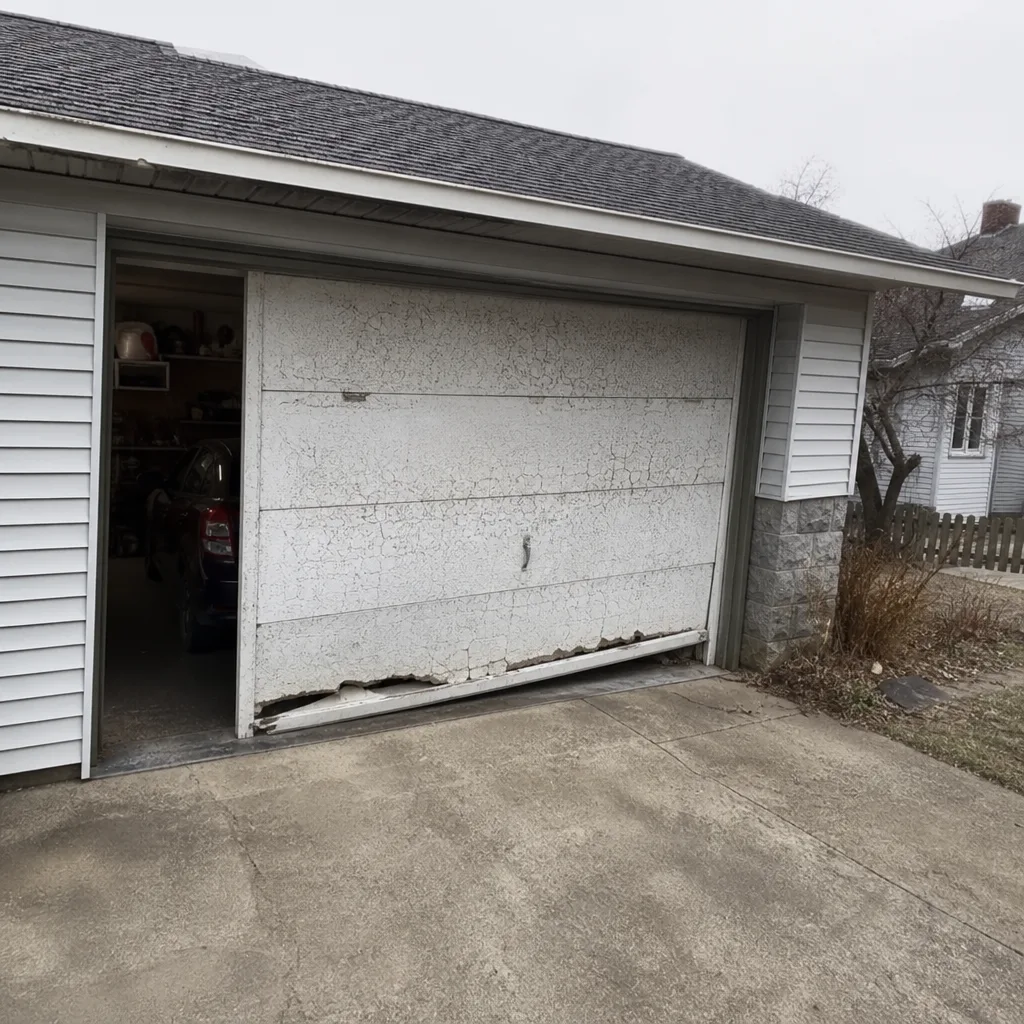
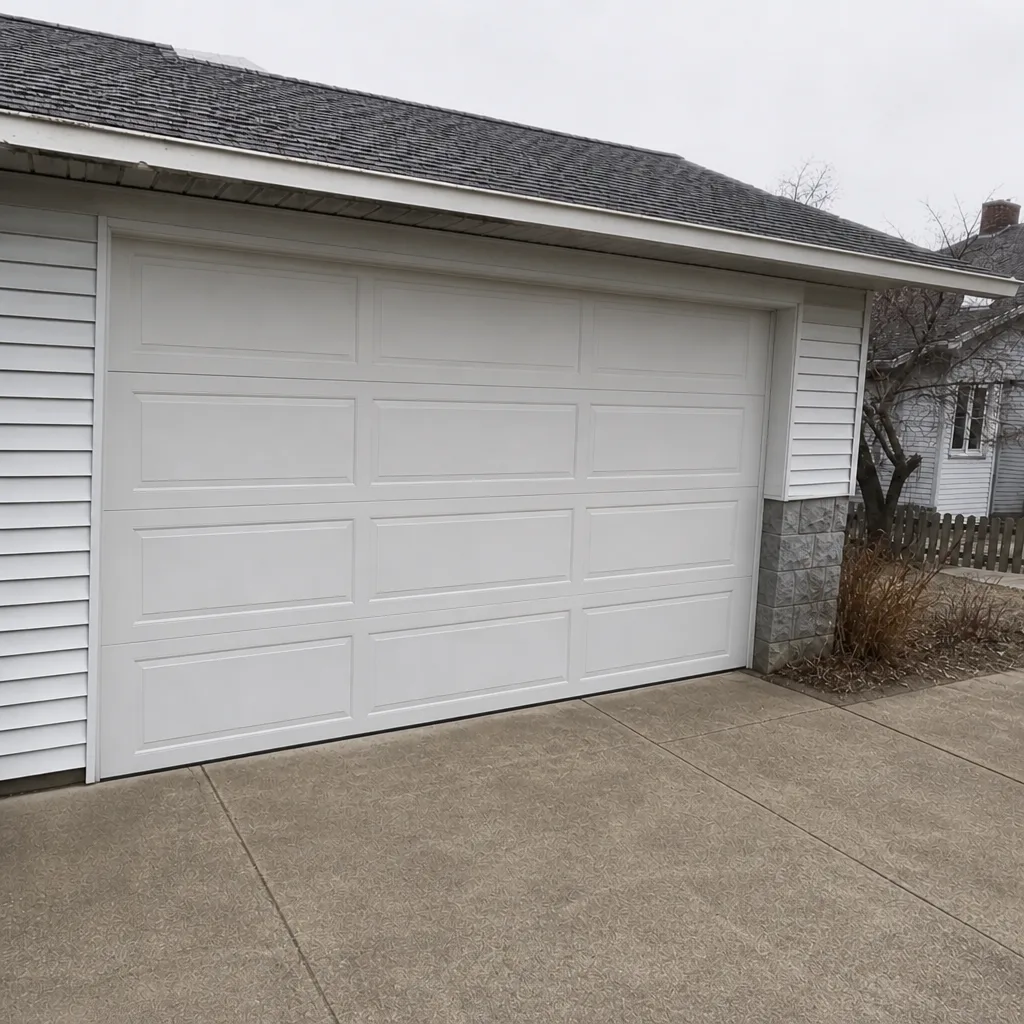
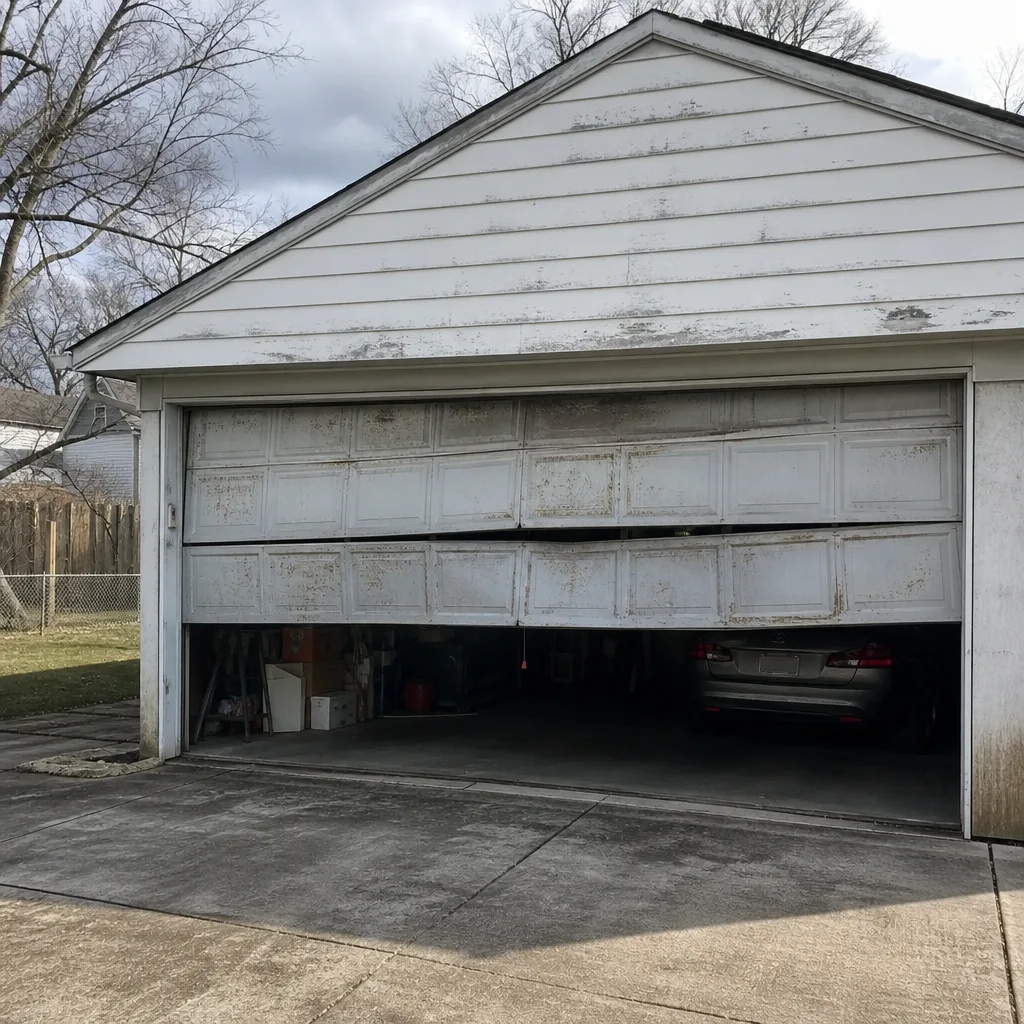
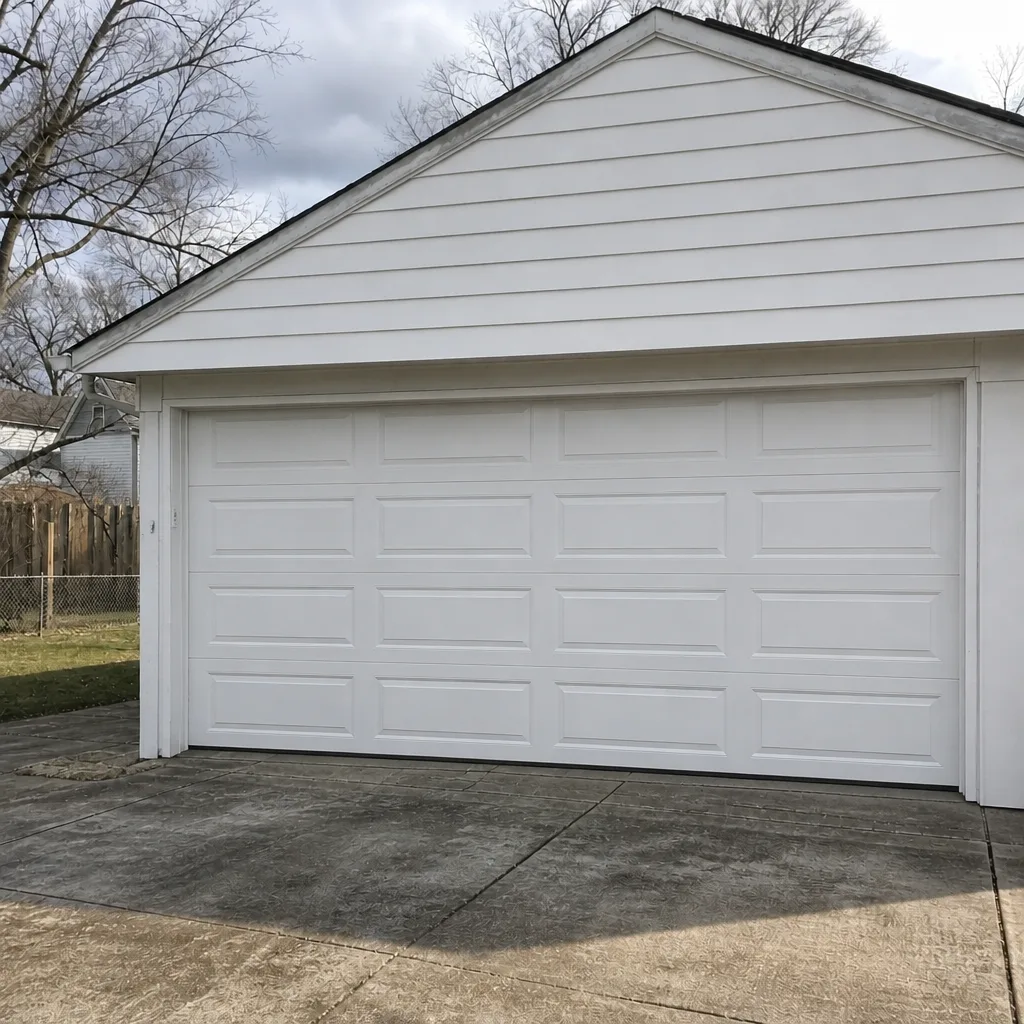
See the difference
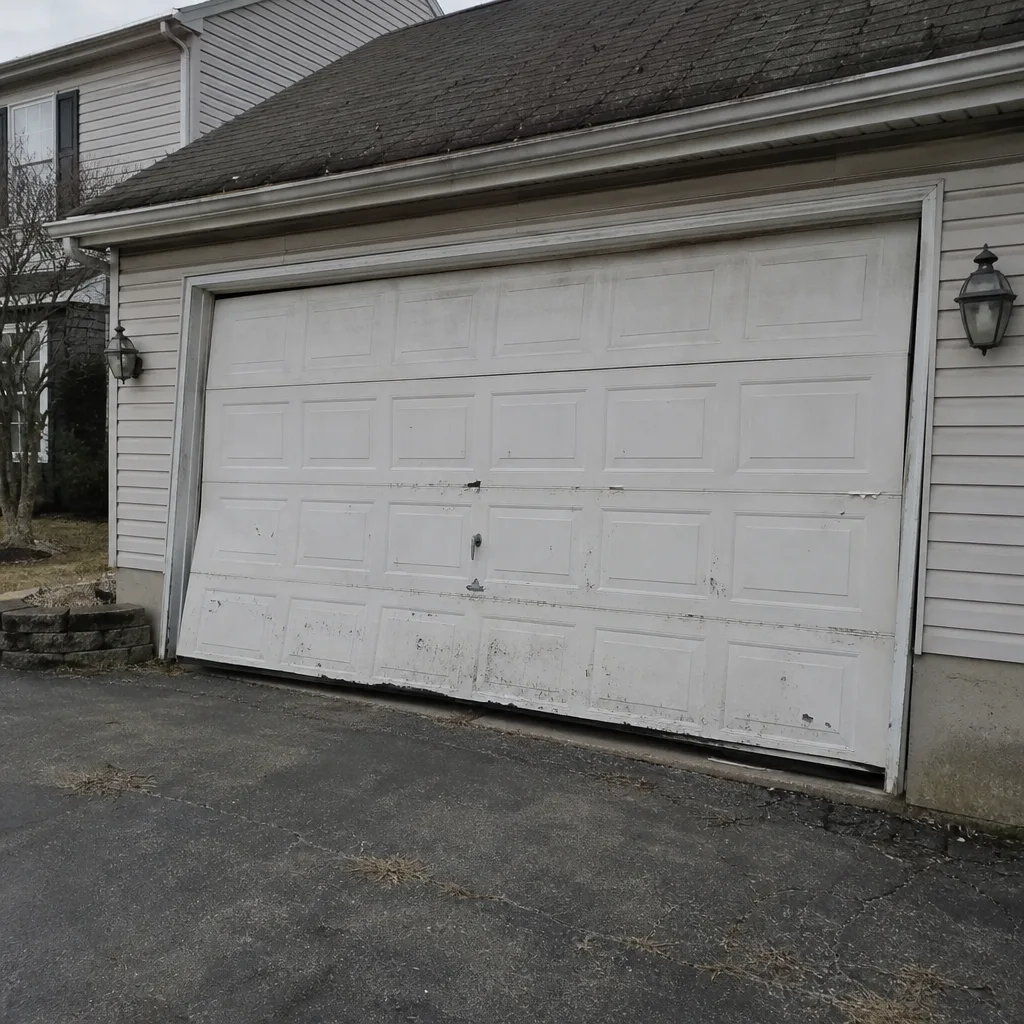 Before
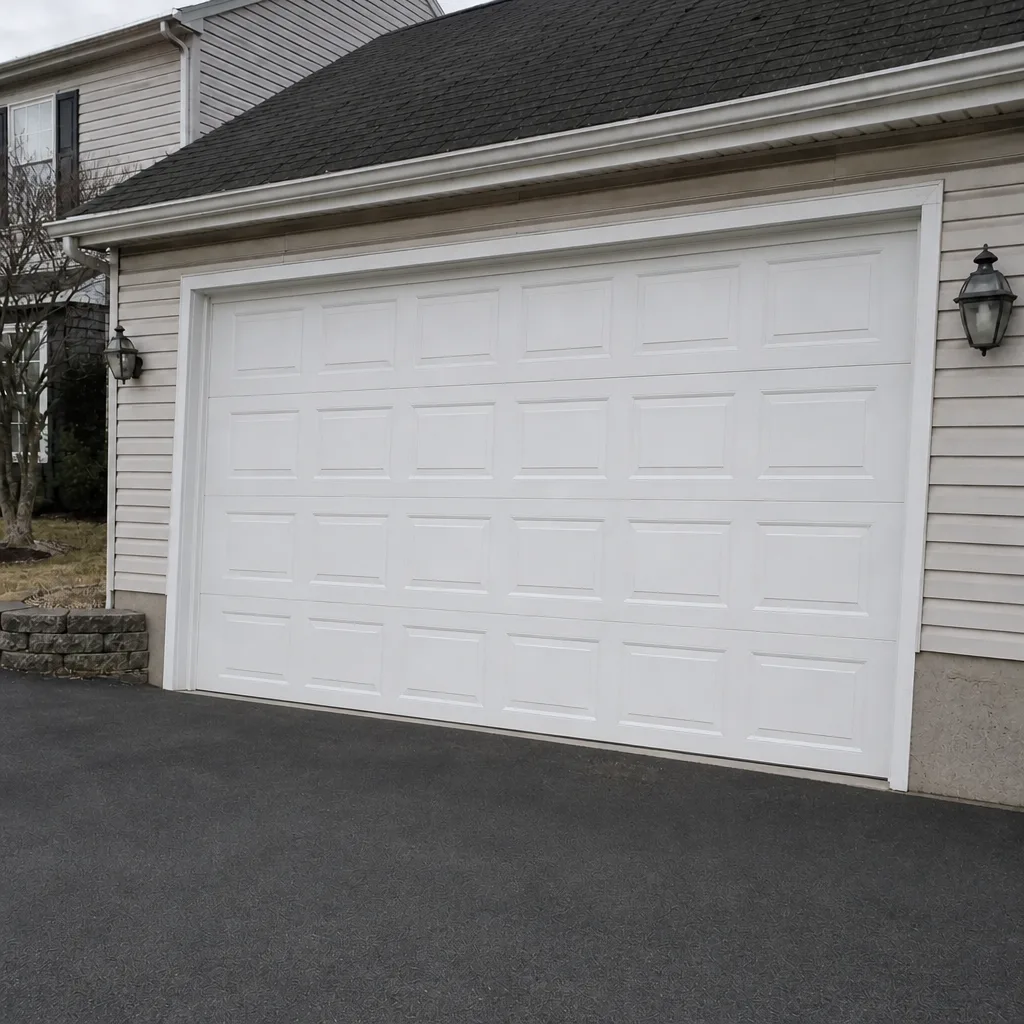 After
 Before
 After
 Before
 After
When to Call a Professional
Call a professional when you can’t tell the difference between “noisy” and “failing,” or when you’ve seen any stop-use sign in this guide. Specifically: a snap or bang followed by a door that won’t lift, a visible gap in a torsion coil, a cable with strands poking out, a door off its track, a door that reverses or runs crooked, or an opener that clicks and won’t lift. Also call if you’re not sure what you’re looking at. A phone diagnosis costs nothing and can save a second visit. Bethlehem Garage Door Repair Co offers free estimates in Bethlehem. Call (866) 937-7470 and we’ll help you sort out what’s failing. Our technicians have up to 14 years of experience. Because we handle panels and drive systems under one roof, you don’t need to chase down a second vendor for an opener problem.
Frequently Asked Questions
A spring about to fail often shows a visible gap in the torsion coil, a stretched-out look on an extension spring, or loud popping or banging when the door cycles. If you see or hear that, stop using the door and call for a technician. If the door sounds fine but is noisy, that’s usually a lubrication issue rather than a spring about to fail, though it’s worth confirming. Call (866) 937-7470 for an exact quote. Estimates are free.
Usually not. Grinding is most often dry or worn rollers, which allows normal use while you schedule service. But grinding that comes with a door running rough or an uneven side should be checked soon. If you’re not sure, call and describe the sound and where it’s coming from. We can help you tell the difference between “okay to wait” and “don’t use it.”
A door that reverses before closing usually points to a safety sensor that’s out of line, dirty, or blocked, or to a binding track that the opener reads as an obstacle. Check for a visible obstruction at the sensor light and wipe the sensor lens. If it’s not the sensor, don’t keep cycling the door; call for garage door repair and we’ll narrow down the cause.
It depends on the failed component, so there’s no single number. Rollers, hinges, and lubrication are on the lower end; spring replacement, cables, and opener repairs are more. What matters is that the written estimate sets the final price. We quote before any work starts, and you agree to it first. Call (866) 937-7470 for a free estimate.
Only if the diagnosis turns up something different from what was described. That’s why we ask about the brand, sound, and behavior over the phone. The written quote sets the price, and we agree it with you before any work starts. Call for a free estimate.
The local pro we connect you with is licensed and insured as their state requires. Ask to see their credentials if you’d like. Spring and cable work is hazardous and worth confirming before anyone touches the door. Call (866) 937-7470 with your questions before you book.
No. Cables run under high tension, and a frayed cable can snap and whip. Don’t try to loosen, rewind, or replace one yourself. A trained technician is the right person, and the failure mode is genuinely dangerous. If you see frayed strands, stop using the door and call.
Look for a visible gap in the spring, strands poking out of the cable, a door that sits crooked, and whether the safety sensors are blocked. Note the sound and its location. Then call and describe what you found. That’s usually enough for us to tell whether it’s an emergency or a scheduled visit. Call (866) 937-7470 for a free estimate.
The Bottom Line
Garage doors fail in stages, and the stage you’re in shows up as a sound, a visual cue, or a behavior. Banging, popping, or a door that won’t hold its weight means stop and call. Grinding, squealing, or a rattle allows you to schedule service. Frayed cables, a broken spring, or a door off the track are stop-use signs. In Bethlehem, the cold winters and humid summers mean checking the balance and lubricating before the cold hits is worth the five minutes. When in doubt, describe the brand and the symptom over the phone. That’s the difference between one visit and three. At Bethlehem Garage Door Repair Co, we’re a garage door specialist, not a generalist, and we work on the specific hardware in front of us. If this guide left you unsure what’s failing, call us at (866) 937-7470 for a free estimate. We’ll help you figure it out. Ready to get your door moving again? Start at the Bethlehem Garage Door Repair Co page.
Written by the team at Bethlehem Garage Door Repair Co.