Last updated November 22, 2026
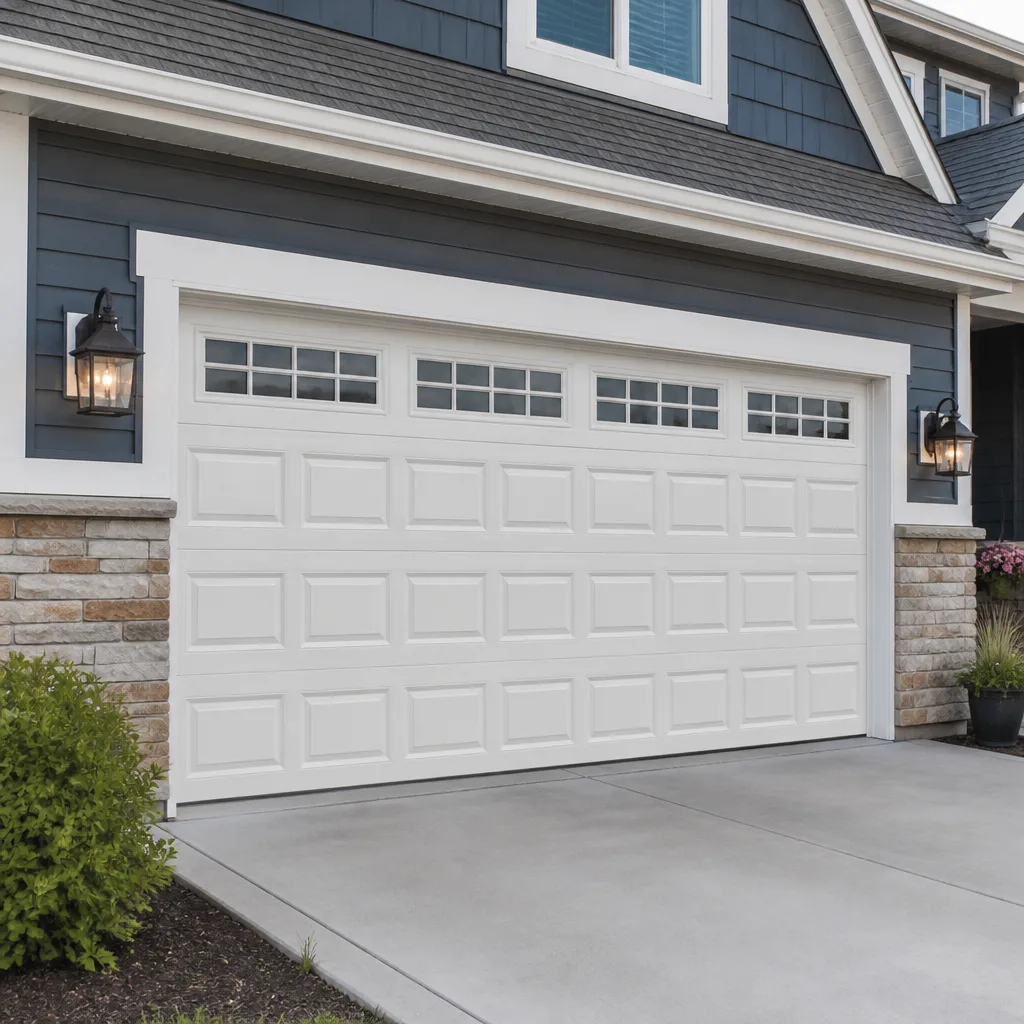 Raised-panel steel
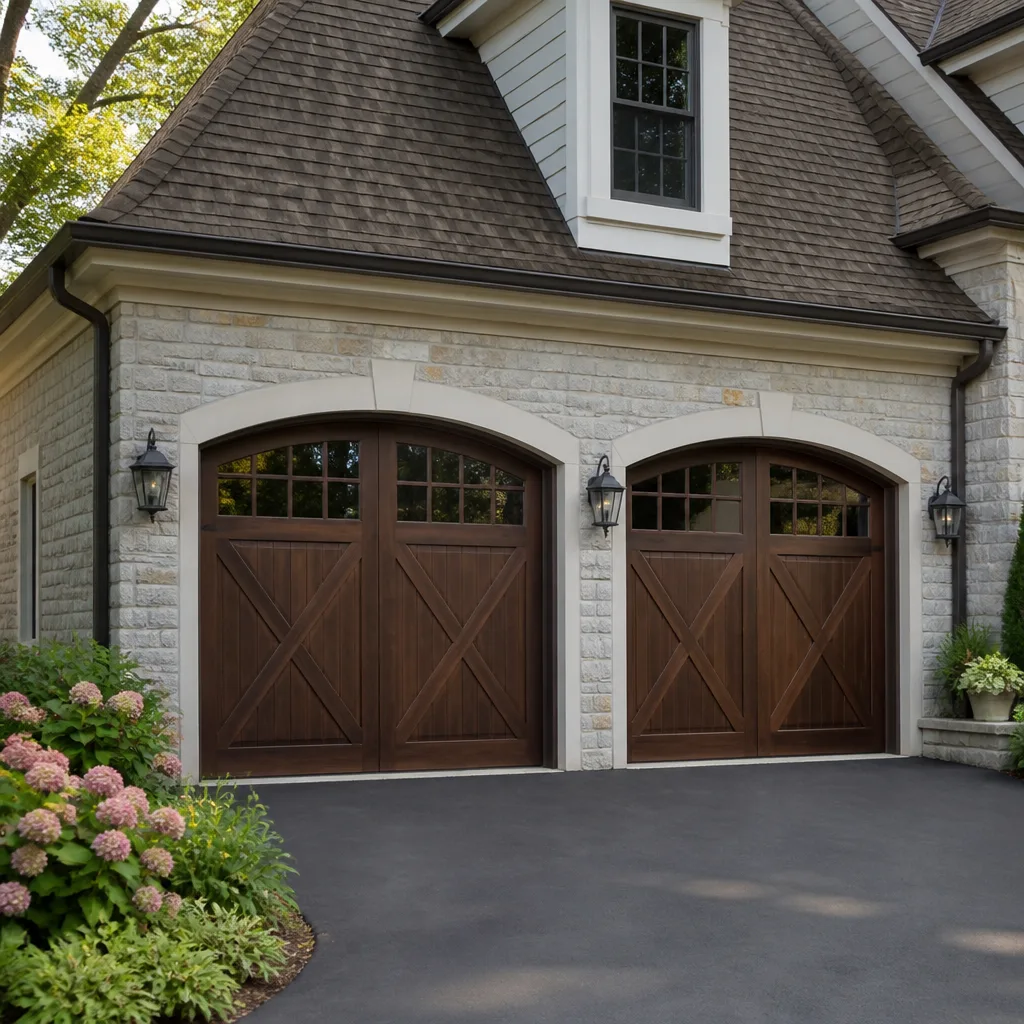 Carriage house
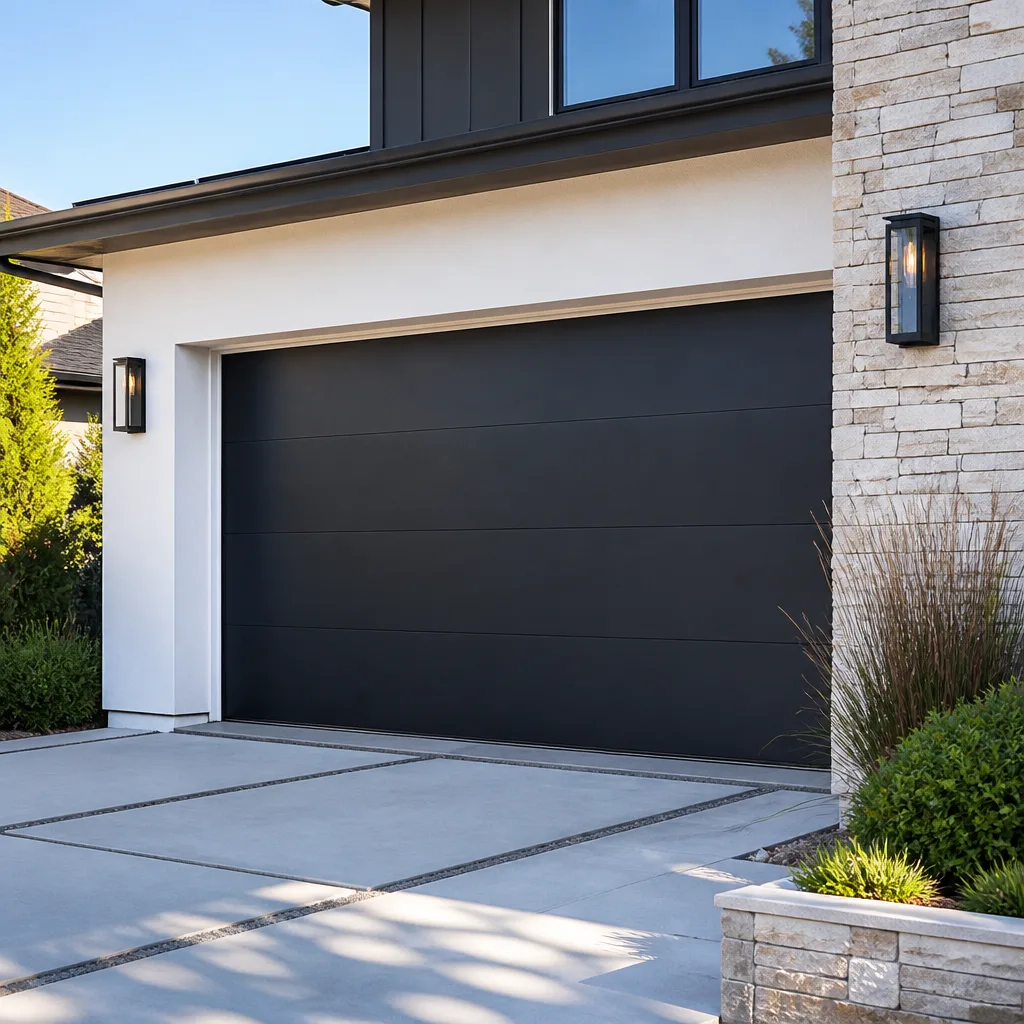 Modern flush
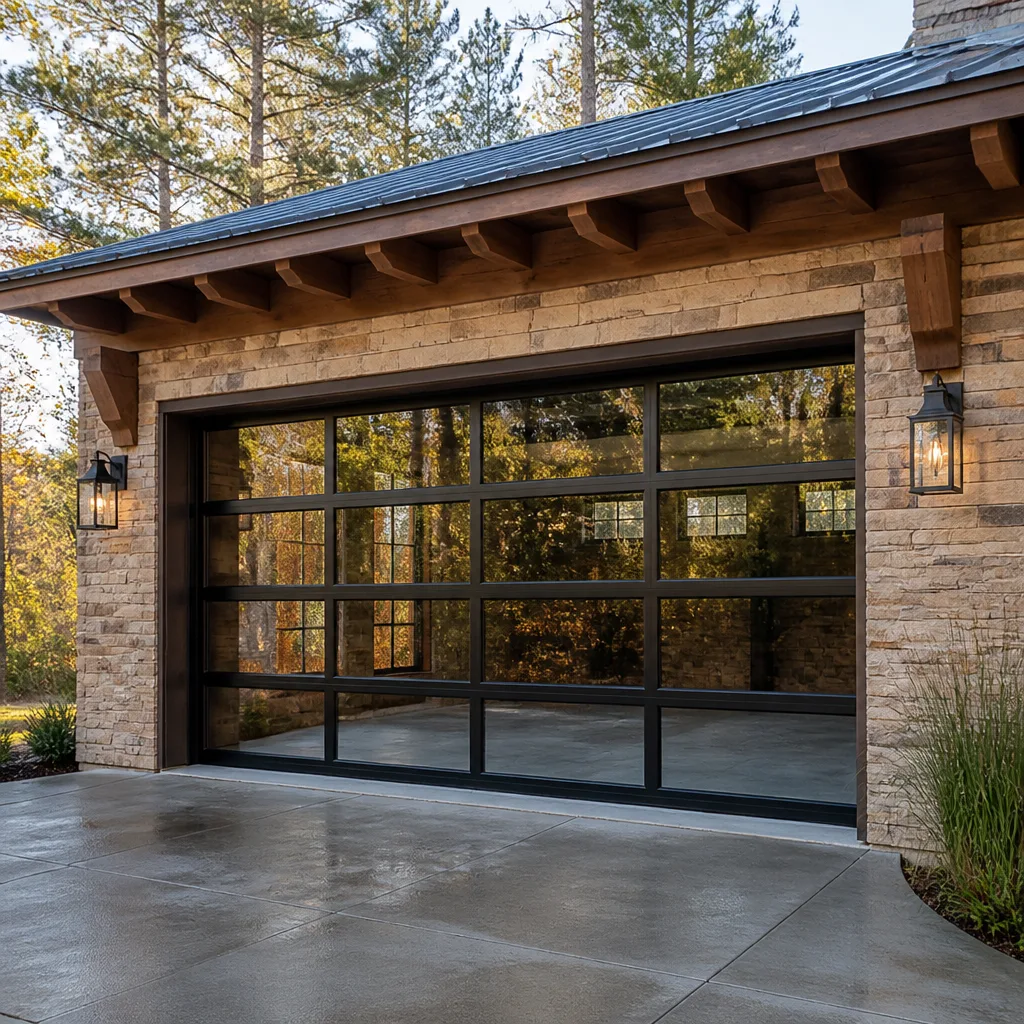 Full-view glass
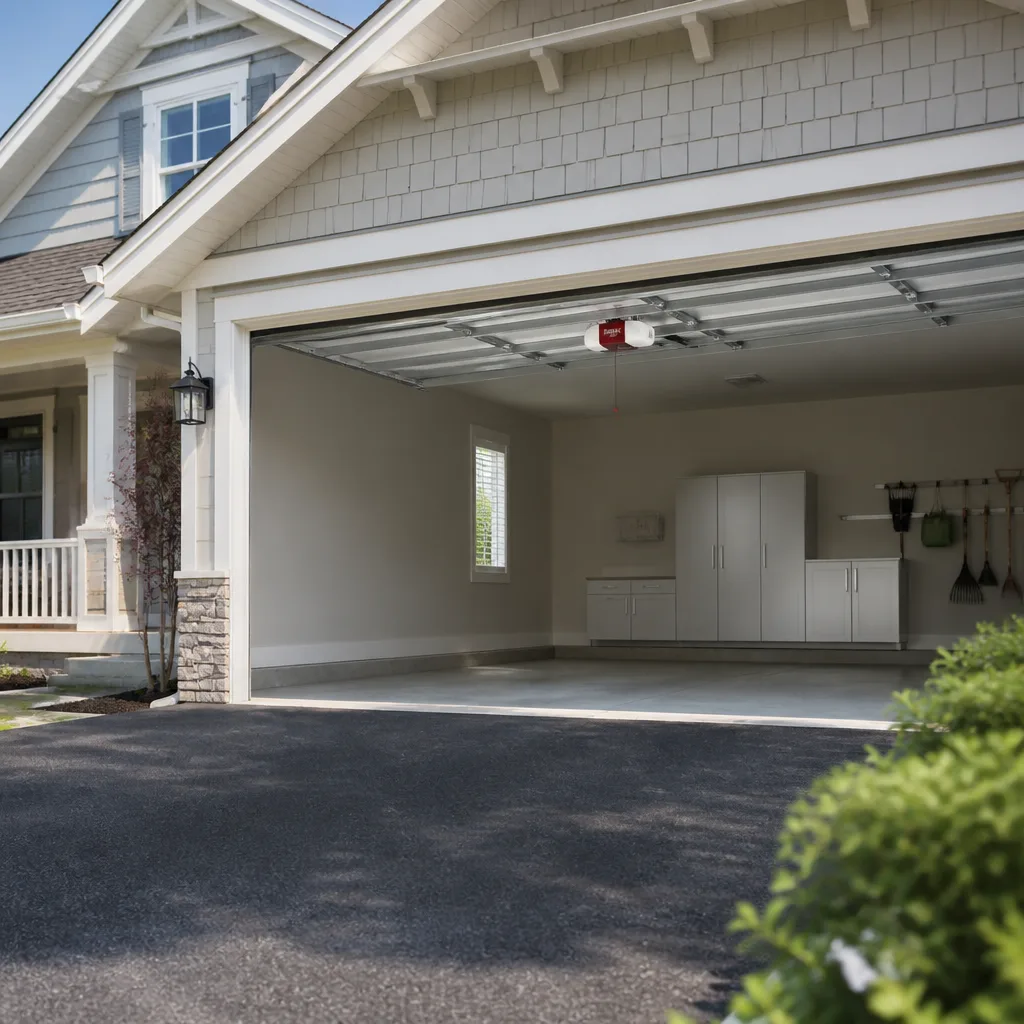 LiftMaster openers
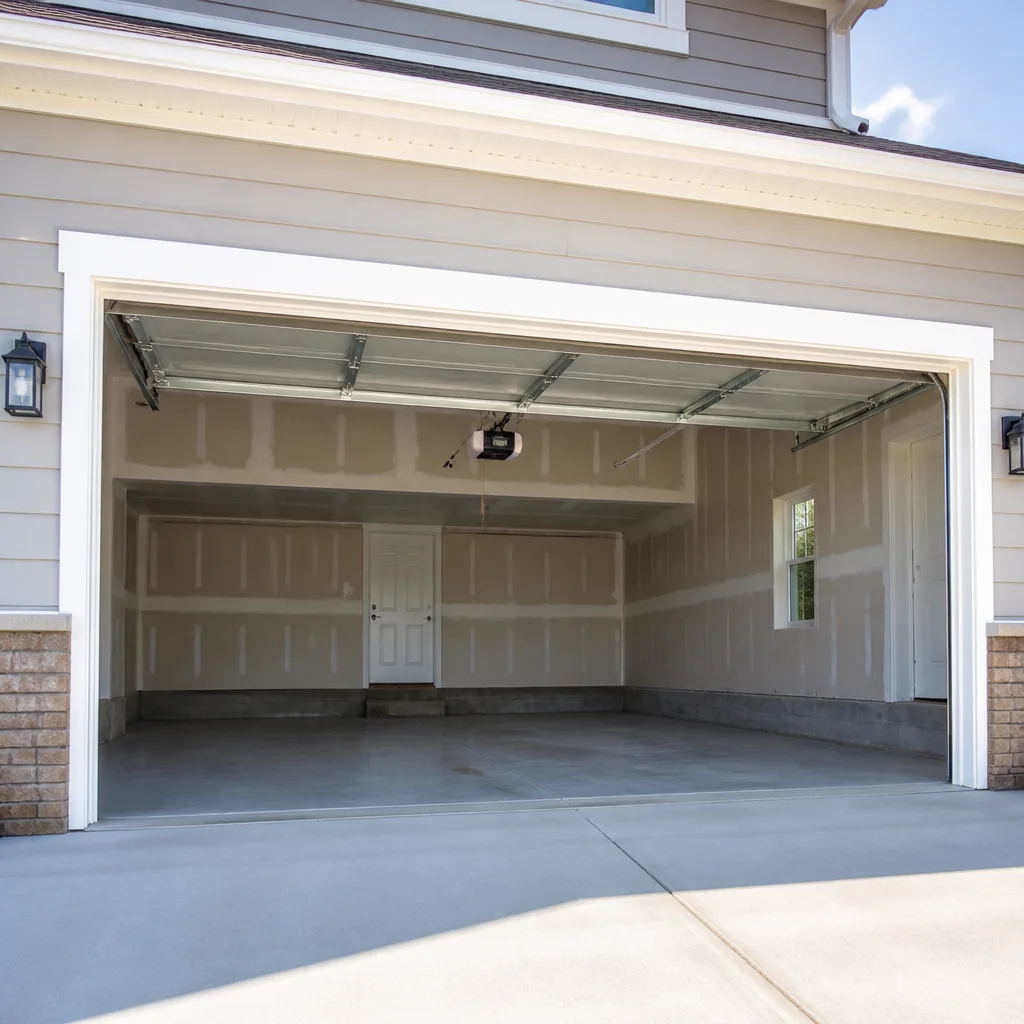 Chamberlain openers
Full 25-point door and opener safety check with every visit - springs, cables, rollers, tracks, and your LiftMaster or Chamberlain opener included
You get a price before we start. It does not change when the pro arrives.
Get your free estimateThe Complete Guide to Garage Doors in Bethlehem
Most homeowners think of a garage door as one purchase: you pick a style, you pay for it, and you’re done. That framing is why so many people are surprised when a $40 cable turns into a $600 emergency call. A garage door isn’t one product. It’s a system of five interdependent parts – torsion springs, tracks and rollers, the opener, panels, and seals – each with its own lifespan and its own failure mode. Springs break on a schedule. Seals wear thin on a different one. Openers lose force as motors age, and aluminum panels loosen at their joints. When you understand which part is aging and why, you make better decisions at every stage of ownership, not just when something snaps. This guide maps the whole system for Bethlehem homeowners.
Quick Answer
A residential garage door in Bethlehem is a system of five components with different service lives, so the smart approach is to understand each one before it fails rather than after. Torsion springs typically lead the failure list in this climate because freeze-thaw cycles work them harder than milder regions do. Matching the right door type and opener class to your home, and knowing the warning signs, is what separates a manageable repair schedule from a string of emergency calls.
Styles & brands we work with
- Raised-panel steel
- Carriage house
- Modern flush
- Full-view glass
- LiftMaster openers
- Chamberlain openers
Table of Contents
- Why Bethlehem’s Freeze-Thaw Cycles Are Hard on Springs, Seals, and Panels
- How to Read Your Existing Door’s Hardware Before You Call Anyone
- Panel Replacement vs. Door Replacement vs. Full System Replacement
- The Bethlehem Brand Landscape: Which Hardware Fits Which Home
- The Lifecycle Cost Model: Upfront Price vs. Ten-Year Ownership
- Garage Door Safety: What You Should Never Attempt Yourself
- The Emergency Decision Tree: When to Call and What to Say
- A Simple Maintenance Calendar for Bethlehem Homeowners
Why Bethlehem’s Freeze-Thaw Cycles Are Hard on Springs, Seals, and Panels
Cold doesn’t just make your door feel heavier. It changes the metal. Bethlehem sits in a climate where winter nights regularly drop below freezing and daytime temperatures climb back above it. That cycle repeats dozens of times each season, and each swing expands and contracts the door differently.
Torsion springs carry the full weight of the door through hundreds of open-and-close cycles a year. Every cold contraction tightens the coil. Every warm expansion releases it. That flexing accumulates as fatigue in the wire, and fatigue is what eventually cracks a spring. In our experience, a door that’s been through several Bethlehem winters will often show visible pitting or a slight sag long before the spring actually snaps – if you know to look.
The bottom seal takes a different kind of beating. Rubber and vinyl weatherstripping harden in the cold and can tear along the edges where it meets the concrete. A torn seal lets in snowmelt and drafts, which then works its way toward the tracks.
Aluminum panels expand and contract at the joints. Over time, the fasteners loosen and the panel can rattle or drift out of alignment. Here’s what each component faces specifically in this climate:
- Torsion springs: Repeated cold contraction accelerates metal fatigue and shortens the window between “still working” and “snapped.”
- Bottom seals and weatherstripping: Hardening rubber cracks at the edges, breaking the seal against the floor and letting in cold air and moisture.
- Aluminum panel joints: Expansion and contraction loosens fasteners and can push panels slightly out of square over successive seasons.
- Tracks and rollers: Grit, ice melt, and moisture collect in the channels and increase friction on the moving parts.
None of this means your door is on a timer. But it does mean a pre-winter inspection matters more here than it would in a milder region, and it changes how you should think about spring service intervals. When you do need a hand, garage door repair handled by a specialist who understands the local wear pattern will catch these issues earlier.
How to Read Your Existing Door’s Hardware Before You Call Anyone
Before you call anyone, you can gather a surprising amount of information just by looking. Knowing what you have shortens the diagnostic conversation and helps you spot the difference between a minor issue and a real problem.
Start with the hardware stamped on the opener unit or its mounting rail. Most openers carry a manufacturer plate listing the brand and model. LiftMaster, Chamberlain, Genie, and Craftsman units all use slightly different force adjustments and safety-reversal settings, so identifying the brand first tells a technician which diagnostic path to take before they even arrive.
Next, look at the door itself. Panels usually carry a manufacturer’s stamp on the inner face or along the bottom rail. Clopay, Amarr, Wayne Dalton, and Raynor are the most common names we see in Bethlehem, and knowing which one you have narrows down parts availability immediately.
Then check the springs. The spring winding – either torsion mounted on a bar above the door or extension running parallel to the horizontal tracks – is easily visible, but the cycle rating usually isn’t stamped where you can read it. Don’t try to measure or manipulate a spring to find out. A visual inspection is fine; touching it is not.
Here’s a quick sequence for reading your own door safely:
- Locate the opener manufacturer plate and note the brand and model number.
- Look for a stamp on the inside of a door panel to identify the door manufacturer.
- Note whether your springs are torsion (horizontal bar above the door) or extension (running along the side tracks).
- Observe, don’t touch: check for visible sagging, rust, or a gap in the spring coils.
- Note the door’s approximate age if you can infer it from the hardware or purchase records.
- Write down the symptoms you’re seeing – noise that started recently, unusual travel, or a door that reverses before closing.
That short list is everything a technician needs to prepare. It’s also why calling a specialist first saves time: technicians factory-familiar with 8 common residential brands can often identify the hardware and its likely failure point from a brand name and a symptom description alone. If the opener itself is the issue, garage door opener repair for the specific brand you’ve got keeps you from replacing hardware you don’t need to.
Panel Replacement vs. Door Replacement vs. Full System Replacement
When something goes wrong, the instinct is often to ask “repair or replace?” But there are actually three levels of intervention, and they serve very different situations. Getting the level right is the single biggest factor in what you spend.
Panel Replacement
Panel replacement makes sense when a single panel is dented, cracked, or visibly damaged but the rest of the door is structurally sound and the springs and opener are still in good condition. Because modern doors keep consistent panel profiles for years, a matching panel is often available – especially if you’re working with a manufacturer like Clopay or Amarr whose panel lines are broadly distributed. This is the least invasive option and the one most homeowners actually need when a door takes a hit.
Door Replacement (the section, not the system)
Door replacement is the right call when the panels as a whole are deteriorated – rusted through, warped from moisture, or several of them damaged at once. The springs, tracks, and opener might still have life left in them, but the door itself has aged past the point of economical repair. In this case, the hardware underneath can often be reused if it still tests out, which keeps the cost below a full system swap.
Full System Replacement
Full system replacement is the situation where the door, the springs, the tracks, and the opener are all at or near the end of their service lives at the same time. It’s not common, but it happens – especially when a door reaches an age where each repair call is becoming the next repair call. Replacing the whole system at once is usually the smarter spend at that point rather than patching one element after another.
- Panel replacement: one damaged panel, sound structure, working springs and opener.
- Door replacement: multiple panels deteriorated, springs and opener salvageable.
- Full system replacement: door, springs, tracks, and opener all at end of life together.
This is where a specialist who handles both the door panel and the drive system earns their keep. When you can evaluate and replace a Clopay panel and a LiftMaster opener under the same roof, nobody has to hand you off to a second vendor to finish the job. When the whole system is beyond saving, garage door installation for a matched new door and opener pairing is the clean path forward.
The Bethlehem Brand Landscape: Which Hardware Fits Which Home
Walk down a residential block in Bethlehem and you’ll see a handful of brand names repeated across the doors and openers. Knowing how the major brands map to different situations helps you ask better questions when you’re ready to repair or replace.
LiftMaster vs. Chamberlain openers
LiftMaster and Chamberlain share a parent company, so their units have a lot in common internally, but the positioning differs. LiftMaster is the brand you’ll more often find paired with a newer, heavier door because the opener is built with a bit more lifting headroom and is compatible with more accessory systems. Chamberlain is the broader consumer line – reliable, widely distributed, and easy to service. Both are common on Bethlehem homes, and both are worth keeping rather than replacing if only the logic board or sensor has failed. That distinction matters in a town with a lot of older doors being retrofitted with newer openers.
Genie openers
Genie has a strong presence in homes where a quieter screw drive or belt drive was the priority. For a door that opens over a bedroom or a finished living space, a quieter opener class is worth considering. Genie units are among the brands we service, and diagnosing one usually comes down to knowing its specific travel and force adjustment behavior.
Clopay, Wayne Dalton, Amarr, and Raynor doors
Clopay is one of the most widely distributed residential door brands, which is why panel matching tends to be straightforward. Wayne Dalton and Amarr both offer solid mid-range options that hold up well in this climate, though panel availability is one step narrower than Clopay’s. Raynor is a slightly more specialized name – less common on every block, but worth knowing if you’ve got one, because the door’s construction rewards a technician who already knows the hardware. If you’re in a neighborhood like North Bethlehem or over by the Moravian campus, older homes often carry doors from these lines that have never been serviced since installation.
| Brand | Component | Common Bethlehem role |
|---|---|---|
| LiftMaster | Opener | Heavier and newer doors, more accessory headroom |
| Chamberlain | Opener | Broad consumer line, easy to service |
| Genie | Opener | Quieter drive classes for finished living spaces |
| Clopay | Door panel | Widely distributed, easiest panel matching |
| Wayne Dalton | Door panel | Mid-range reliability, narrower panel availability |
| Amarr | Door panel | Mid-range option, steady in this climate |
| Raynor | Door panel | More specialized construction, worth a brand-familiar tech |
The Lifecycle Cost Model: Upfront Price vs. Ten-Year Ownership
One of the biggest misconceptions in the garage door market is that upfront price and ownership cost move in the same direction. They don’t always. A cheaper door can end up costing more over ten years if the springs wear out early and the opener runs at the edge of its capacity. Understanding how the numbers work helps you weigh the right trade-offs.
Think in terms of three cost layers:
- Upfront cost: what you pay for the door, springs, and opener at installation.
- Recurring service cost: spring replacements, seal replacement, track and roller adjustments, opener repairs over the door’s life.
- Emergency cost: the premium you pay when something fails on a schedule you didn’t plan for.
Most of the difference between a door that costs a stack of repairs over a decade and a door that runs on routine maintenance comes down to two things: spring cycle rating and opener class. A higher-cycle spring costs more upfront but needs replacing less often. An opener matched to the door’s actual weight runs cooler and lasts longer than one that’s always working at capacity.
Here’s a fair way to lay out a ten-year view:
- Estimate the door’s realistic service life in this climate.
- Estimate how many spring cycles the door will see in that time (heavier use pushes this up).
- Note which springs – and estimate how many spring replacements you’d do on a low-cycle vs. high-cycle rated spring.
- Estimate seal replacement frequency (remember the freeze-thaw cycle here shortens this).
- Note the opener’s expected life based on class (a quieter belt drive with more headroom often lasts longer under the same load).
- Add the emergency premium – the difference between scheduled service and an unplanned call.
The tag on the door is only one line of that story. When you’re ready to talk through the full picture for your home, a free estimate from Bethlehem Garage Door Repair Co walks through each cost layer without a hard sell.
Garage Door Safety: What You Should Never Attempt Yourself
There’s a real line between what you can safely check and what you should never touch. Most garage door components are safe to inspect visually. Two are not.
High-tension torsion springs and their cables store enormous energy. When a spring or cable lets go under load, it releases that energy instantly along the spring bar or cable path. The result is serious injury, and there’s no safe way to test or disengage a spring by hand. If your door won’t go up, or you hear a loud snap, the correct response is to stop and call a professional – not to try to open the door manually or fish the cable back into place.
Cables are the same story. They’re under load whenever the door is up, and they can whip when they fail. Never cut, adjust, or unwind a cable yourself.
Electrical components on the opener are the third area to treat carefully. If you’re seeing symptoms in the opener – unusual travel, reversing, or a dead sensor – the fix is usually a trained adjustment rather than a hardware swap, but it’s not something to work through blind. High-voltage wiring runs into the opener head, and the safety-reversal circuits are what stop a door before it hits something in its path.
What you can safely do:
- Visually inspect springs for visible sagging, rust, or a gap.
- Look for torn or hardened bottom seals.
- Listen for new noises and note when they started.
- Check that the opener’s safety sensor eyes are unobstructed and lens-clear.
- Test the safety reversal using a light object under the door only if you’re sure the door is moving normally.
If a spring has snapped, a cable is slack or off its drum, or the door is hanging unevenly, do not try to operate it. Technicians specifically trained in torsion and extension spring work – and up to 14 years of experience – know how to de-energize and safely replace these components. That technical training is the whole reason we offer spring repair as a dedicated service rather than treating it as routine door work. Call garage door repair the moment you see a broken spring; a same-day visit is usually the right move.
The Emergency Decision Tree: When to Call and What to Say
Not every door issue is an emergency, and treating a rattling panel like a snapped cable wastes your time and money. Here’s a clean triage for deciding what to do when the door won’t do what you need it to.
- Does the door open but not close? (or close but not open?) Check the safety sensor lens first. If the eyes are blocked or dirty, that’s a quick fix. If it’s not the sensor, call for service – it’s usually an opener adjustment.
- Did you hear a loud snap? That’s almost certainly a spring. Stop using the door. Don’t try to open it manually. Call for emergency spring service.
- Is the door stuck open? This is a security and weather issue as much as a mechanical one, and it’s the call to make quickly. Overnight stuck-open doors are one of the most common emergency situations in Bethlehem, especially when a storm is moving through.
- Is the door uneven or hanging? Don’t force it. An unequal door puts torque on the tracks and can cause the opener to burn out trying to lift it. Call for a diagnostic.
- Is the opener dead? A power outage, a tripped breaker, or a failed logic board – this one can wait if the door itself is functional and you can operate it manually.
When you call, the details that speed things up are the door brand, the opener brand, a description of the symptom, and whether the door is currently open or closed. That’s enough for a specialist to arrive with the right parts on the first visit.
Emergency garage door service exists for exactly these situations. Whether it’s a broken spring, a door stuck open overnight, or an opener that failed without warning, the goal is to get your door moving again as quickly as possible – and to do it without leaving you guessing about what the bill will be. Every price is quoted and agreed before any work starts.
A Simple Maintenance Calendar for Bethlehem Homeowners
A little routine maintenance stretches every component further, and in this climate that’s worth more than it would be in a milder region. Here’s a workable calendar you can follow without any specialty tools.
Once a month: Look at the door while it’s closed. Check for anything that looks new – a gap in a spring coil, a piece of seal peeling away, a panel that’s moving unevenly. Look at the opener’s safety sensor eyes and make sure nothing is blocking them.
Before cold weather arrives: This is the big one in Bethlehem. Check the bottom seal for cracks or tears before winter hardens it further. Listen to the door as it runs; new grinding or banging is worth noting now rather than in January. If you’re going to have a service visit this year, schedule it before the freeze-thaw cycle starts stressing the springs.
Once a year: Walk the track visually for debris, grit, or anything that looks bent. Don’t remove anything from the track yourself – a bent section is a job for a technician. Check that the opener’s hardware is still tight.
Every three to five years: Have the springs, cables, and track inspected by a professional. That inspection catches spring fatigue before it becomes a failure, and can plan for replacement before it becomes an emergency.
If you’re ever unsure whether something is a “watch” problem or a “call now” problem, the safer answer is always to call. A free estimate costs nothing and tells you where the door stands.
Common Mistakes to Avoid
- Treating the door as one purchase instead of a system. Springs, openers, seals, and panels age on different schedules. Assuming they all move together leads to over-replacing in one place and under-maintaining in another.
- Ignoring the bottom seal before winter. In Bethlehem, a worn seal that’s fine in September cracks apart in January. Check it in the fall, not after the first hard freeze.
- Trying to lift a door by hand after a spring snap. The door is much heavier than it feels when the spring is carrying the weight, and a manual lift can send a loaded cable into motion. Never attempt this.
- Calling a general handyman for spring work. Torsion and extension springs require specific training to handle safely. A general contractor who “also does doors” is not the right call for a spring replacement.
- Replacing an opener when only a sensor or adjustment is bad. A test of the safety reversal and limit settings often solves what looks like a dead opener. Diagnose before you replace.
- Choosing a door brand without checking panel availability. Clopay and Amarr panels are broadly available; some brands are narrower. If you plan on future panel replacement, that choice matters.
- Waiting for a slight sag to become a snapped spring. Visible sagging or rust on a spring is an early warning. Addressing it before failure usually keeps the repair scheduled – and cheaper – rather than an emergency.
See the difference
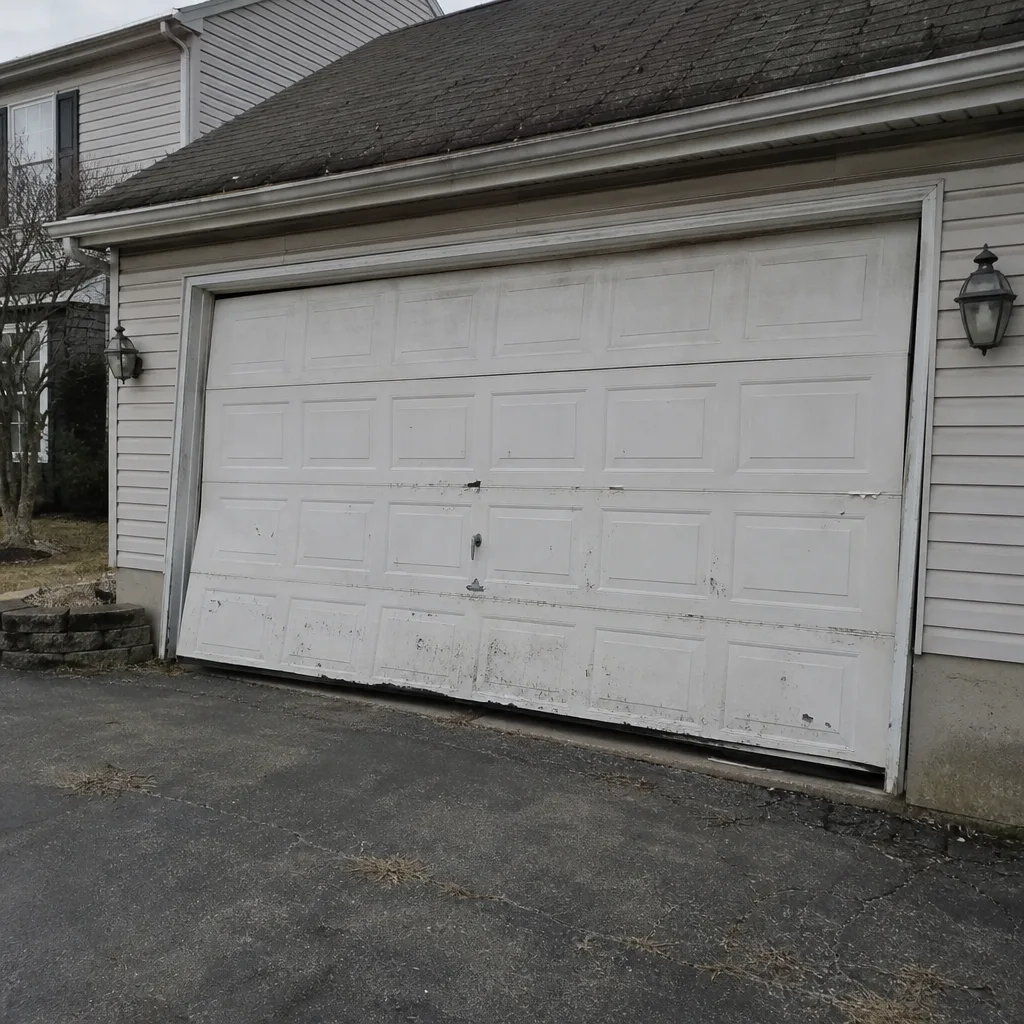 Before
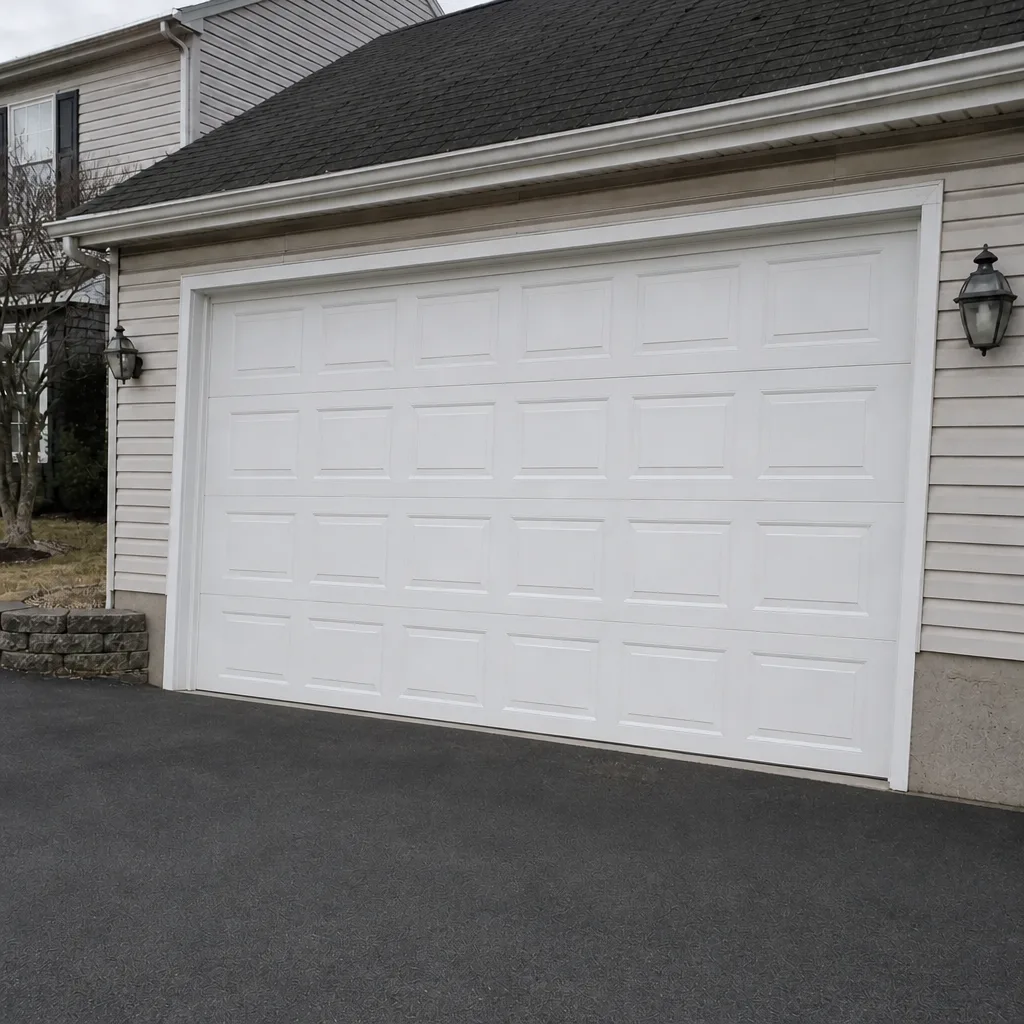 After
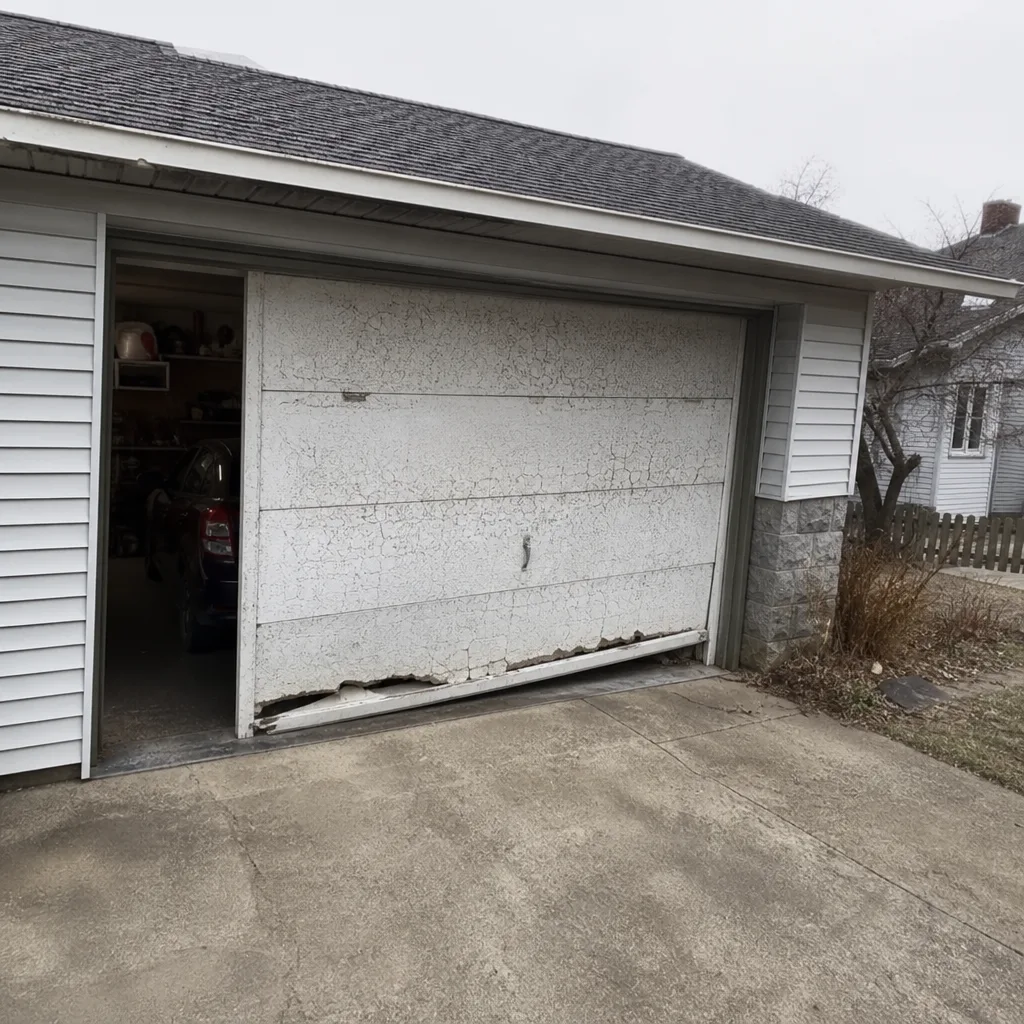 Before
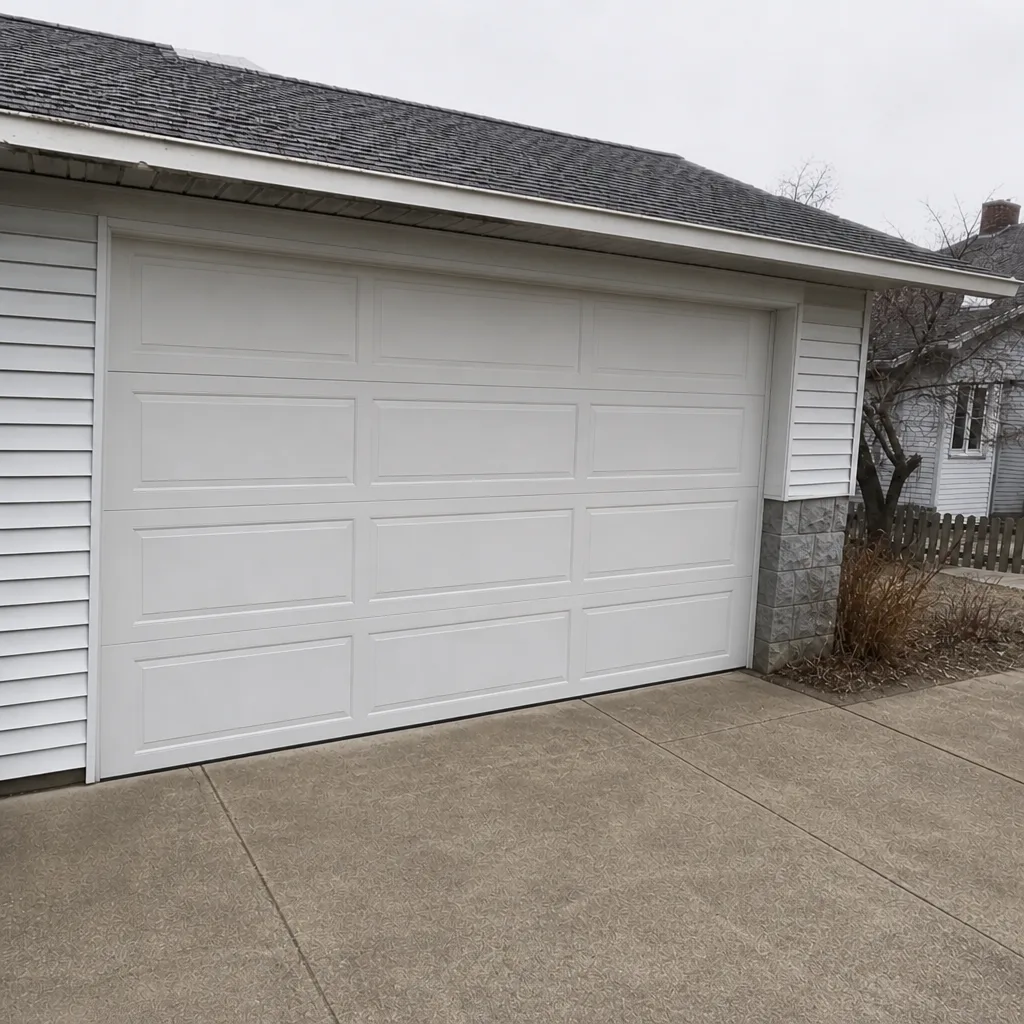 After
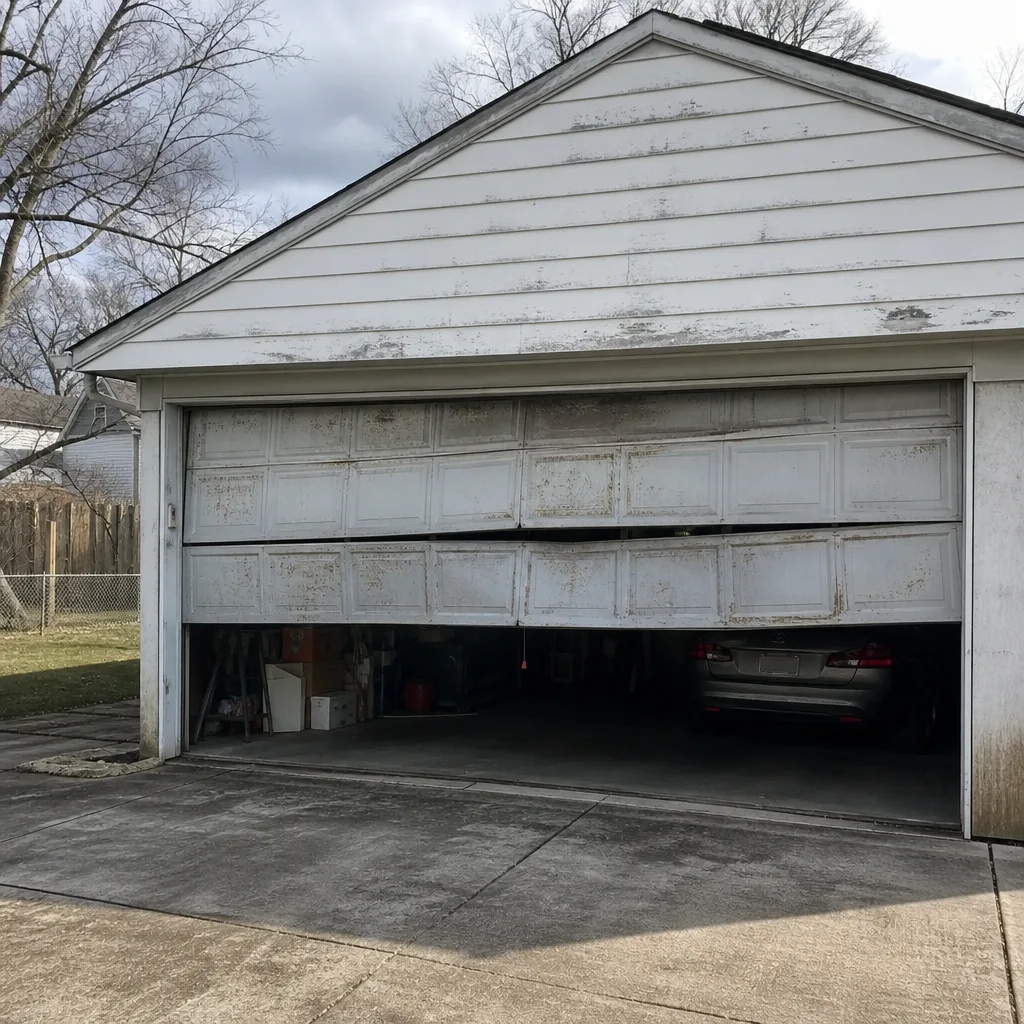 Before
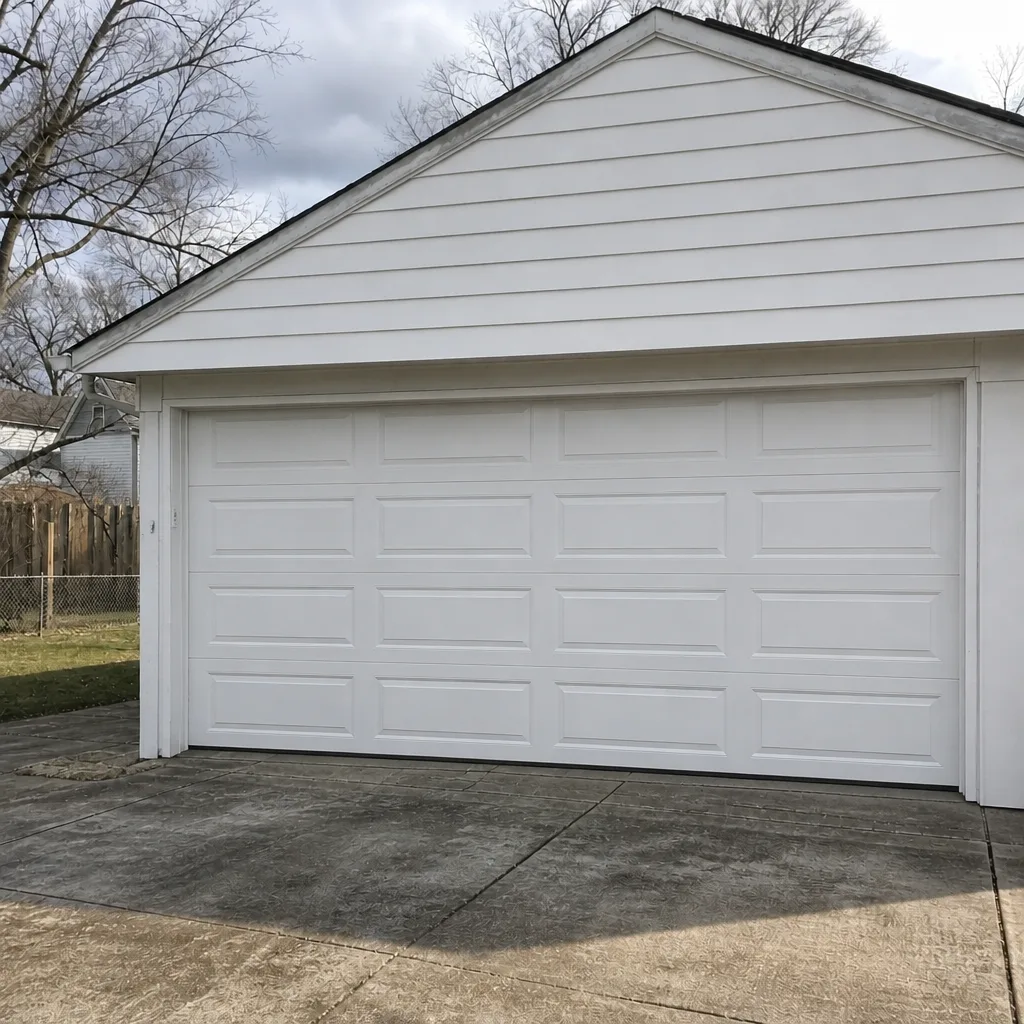 After
When to Call a Professional
Call a professional if you’ve heard a loud snap and the door won’t lift, if a cable looks slack or off its drum, if the door is hanging unevenly, or if a stuck-open door is exposing your garage overnight. You should also call for any issue with opener travel or safety reversal that isn’t solved by a clean sensor eye, and for an annual inspection of springs and tracks if the door is more than a few years old. When it comes to something you’re unsure about, a free estimate from a specialist who knows your door’s brand and hardware settles the question quickly. Bethlehem Garage Door Repair Co offers free estimates in Bethlehem – call (866) 937-7470. Our technicians have up to 14 years of experience and work across LiftMaster, Chamberlain, Genie, Clopay, Amarr, Wayne Dalton, Craftsman, and Raynor.
Frequently Asked Questions
Freeze-thaw cycles accelerate metal fatigue in torsion springs. Every cold contraction and warm expansion flexes the coil, and those flex cycles accumulate over the course of each winter season. That’s why spring failure tends to cluster in early winter and early spring in this region.
Check the mounting plate or rail on the opener for a manufacturer stamp, and look at the inner face of a door panel or the bottom rail for the door manufacturer. LiftMaster, Chamberlain, Genie, and Craftsman are the common opener names; Clopay, Amarr, Wayne Dalton, and Raynor are the most common door names you’ll find here. If you can’t find a stamp, describe the hardware to a technician and they can often identify it from a photo.
Often yes. Single-panel replacement is the right call when the rest of the door is structurally sound and the springs and opener are in good condition. Panel availability varies by brand – Clopay and Amarr tend to match easily, while some narrower lines may need more lead time.
Have the springs, cables, and tracks inspected every three to five years, and check the bottom seal and the door’s operation each fall before the freeze sets in. A door that’s been through many local winters benefits from an annual professional once-over.
The local professional we connect you with is licensed and insured as their state requires. We can provide those details when you call.
No. Every job is quoted and agreed before any work starts, so the price you approve is the price you pay. Call (866) 937-7470 for an exact quote – estimates are free.
The Bottom Line
A garage door isn’t a single purchase – it’s a system of components with different lifespans, and in Bethlehem’s freeze-thaw climate, the springs, seals, and panel joints all age faster than they would in a milder region. Knowing how to read your hardware, understanding the difference between a panel repair, a door replacement, and a full system swap, and matching the right brand of door and opener to your home is how you keep ownership costs predictable and emergencies rare. When something does break – or when you want to plan ahead – call a specialist who knows your brand and quotes the price before work begins. Call (866) 937-7470 for a free estimate.
Written by the team at Bethlehem Garage Door Repair Co.